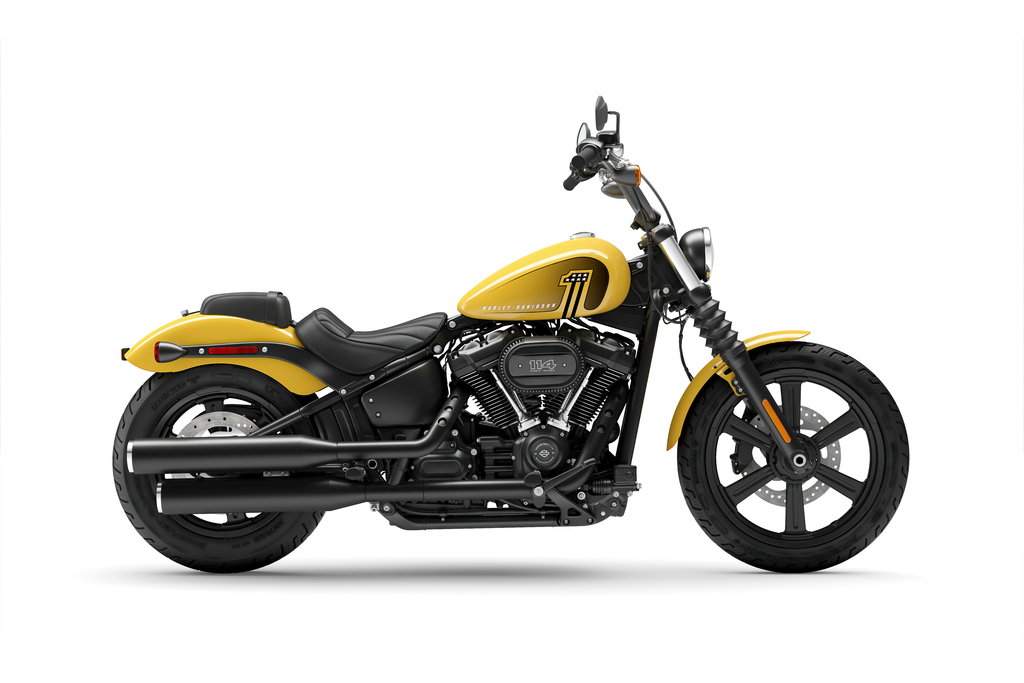
The 1993–1993 Harley-Davidson Touring Evolution 1340 (FLHS Electra Glide Sport) represents a significant and final chapter for one of Harley-Davidson’s most distinct touring motorcycles. Positioned as a stripped-down, more elemental version of the full-dress Electra Glide, the FLHS appealed to riders seeking the comfort and capability of the large touring chassis without the weight and bulk of the iconic “batwing” fairing. The 1993 model year is particularly noteworthy as it was the last year of production for the FLHS, serving as the direct predecessor to the legendary Harley-Davidson Road King, which would debut in 1994. This single-year designation marks it as a unique transitional model, embodying the bridge between classic touring design and the modern classic that would define the next generation of Harley-Davidson motorcycles.
Design and Positioning
The FLHS Electra Glide Sport was conceived as the “no-frills” option within Harley-Davidson’s Touring family. While models like the Electra Glide Classic (FLHTC) and Ultra Classic (FLHTCU) came equipped with comprehensive fairings, full instrumentation, audio systems, and often a Tour-Pak luggage carrier, the FLHS offered a more traditional, uncluttered aesthetic.
Its core design centered on the large FL touring frame, powered by the robust 1340cc (80 cubic inch) Evolution engine. Instead of the fork-mounted “batwing” fairing, the FLHS featured a large, chrome headlamp nacelle, reminiscent of the classic Hydra-Glide models from the 1950s. This was complemented by a detachable acrylic windscreen, offering the rider the flexibility to switch between long-haul wind protection and a stripped-back cruiser profile. Standard equipment included color-matched hard saddlebags, an engine guard, and a comfortable two-up seat, ensuring its touring credentials remained intact.
The 1993–1993 Harley-Davidson Touring Evolution 1340 (FLHS Electra Glide Sport) Model Year
For 1993, the FLHS Electra Glide Sport continued its formula with minimal changes over the immediately preceding years, solidifying its identity as a reliable and straightforward touring machine. The powertrain consisted of the air-cooled 1340cc Evolution V-twin engine mated to a five-speed transmission. The Evolution engine, introduced in 1984, was a significant advancement over the prior Shovelhead, offering vastly improved reliability, reduced oil leakage, and more efficient cooling. By 1993, it was a well-proven and beloved powerplant known for its distinctive torque delivery and classic Harley-Davidson sound.
Final drive was handled by a clean and low-maintenance belt drive system, a feature that had become standard on most of Harley’s Big Twin models. The suspension system utilized telescopic front forks and dual air-adjustable rear shock absorbers, allowing riders to tune the ride for passenger and cargo loads.
The most significant aspect of the 1993 model is its status as the final iteration of the FLHS. Its core concept—a versatile touring bike with classic styling, a large detachable windshield, and hard bags—proved so popular that Harley-Davidson decided to refine and rebrand it. In 1994, the FLHS was discontinued and replaced by the all-new FLHR Road King. The Road King inherited the FLHS’s fundamental design philosophy but introduced updated styling, improved ergonomics, and a more refined finish, quickly becoming one of the best-selling models in the company’s history. This legacy makes the 1993 FLHS Electra Glide Sport a historically important model for collectors and enthusiasts, representing the final and most refined version of the bike that paved the way for an icon.
Technical Specifications
| General | |
| Brand | Harley-Davidson |
| Model | Electra Glide Sport |
| Model Class | FLHS |
| Model Year | 1993 |
| Type | Touring |
| Maximum passengers | 2 |
| Performance | |
| Max. power | ~50 Hp / 4000 RPM (estimated) |
| Max. torque | ~70 ft-lb (94 N•m) / 2400 RPM (estimated) |
| Top designed speed | ~100 mph (160 km/h) |
| Size | |
| Length | 93.7 in. (2380 mm) |
| Width | 34.2 in. (869 mm) |
| Height | 60.0 in. (1524 mm, with windshield) |
| Wheelbase | 62.7 in. (1592 mm) |
| Seat height | 28.5 in. (724 mm) |
| Ground clearance | 5.1 in. (130 mm) |
| Curb weight | 745.2 lb. (338 kg) |
| Engine | |
| Type | 45° V-Twin, Air Cooled, Four Stroke, OHV |
| Displacement | 1340 cc (81.7 cubic inches) |
| Bore × Stroke | 3.49 in. × 4.25 in. (88.8 mm × 108 mm) |
| Compression ratio | 8.5:1 |
| Starting system | Electric starter |
| Fuel supplying system | 40mm Keihin Carburetor |
| Ignition control system | Electronic |
| Lubricating system | Dry sump |
| Oil capacity | 4.0 qt (3.8 L) |
| Engine oil type | SAE 20W-50 |
| Transmission | |
| Transmission type | 5-speed, manual gear shift |
| Clutch type | Wet, multi-disc, manual |
| Driving system | Belt drive |
| Chassis | |
| Tire size | Front: MT90B16; Rear: MT90B16 |
| Rim size | Front: 16 in.; Rear: 16 in. |
| Capacity of fuel tank | 5.0 gal (18.9 L) |
| Fuel consumption | ~42 mpg (5.6 L / 100 km) |
| Electric | |
| Battery | 12V |
| Shock Absorbers | |
| Front Suspension | Telescopic Fork |
| Rear Suspension | Dual Shock, Air-Adjustable |