Dacia Spring Specs, Range, Battery, Dimensions & Features
Eletric Car Dacia Spring Specs, Performance, Range, Dimensions & Features
| Dacia Spring | |
|---|---|
 |
|
| Overview | |
| Manufacturer | Automobile Dacia |
| Production | 2021–present |
| Body and chassis | |
| Body style | 5-door hatchback |
| Layout | Front-motor, front-wheel-drive |
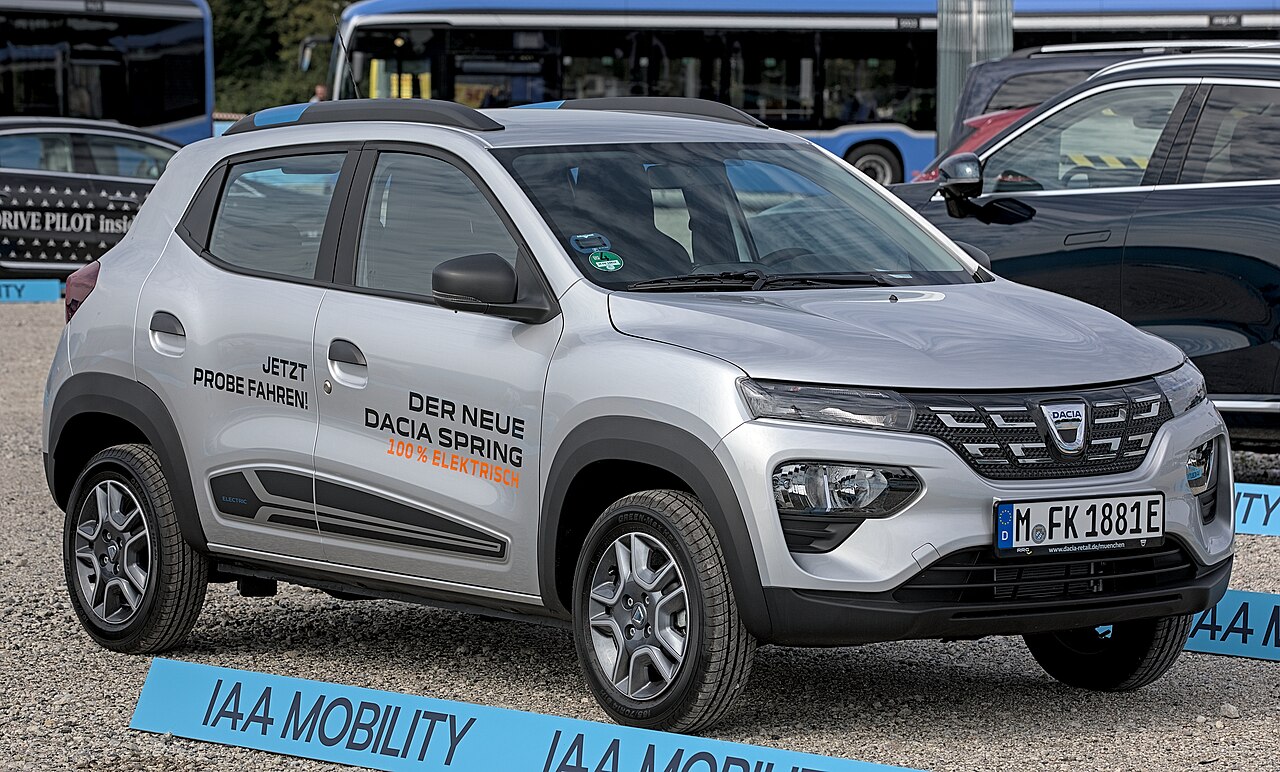
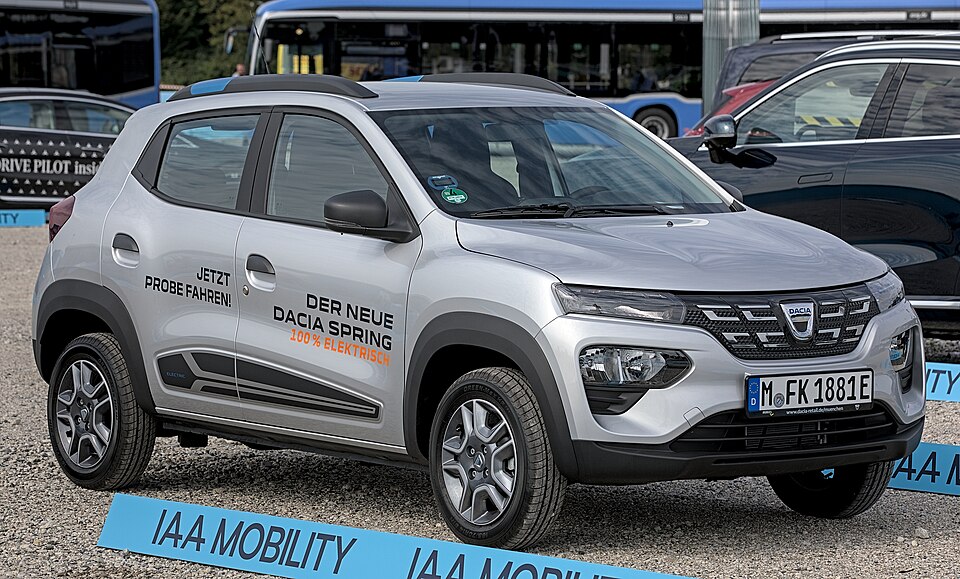
The Dacia Spring is a battery electric city car (A-segment) produced and marketed by Romanian manufacturer Dacia since 2021. The first generation was styled as a crossover, while the second generation adopts a hatchback body style.
First generation (BBG; 2021)
| First generation | |
|---|---|
Dacia Spring Electric 45 (Business)
|
|
| Overview | |
| Model code | BBG |
| Also called | Renault City K-ZE |
| Production | 2021–2026 |
| Assembly | China: Shiyan, Hubei (eGT New Energy Automotive) |
| Designer | David Durand (design director) |
| Body and chassis | |
| Class | Crossover city car (A) |
| Platform | Renault CMFA-EV |
| Related | Renault Kwid |
| Powertrain | |
| Electric motor | Permanent magnet synchronous |
| Power output |
|
| Transmission | Single-speed automatic |
| Battery |
|
| Dimensions | |
| Wheelbase | 2,423 mm (95.4 in) |
| Length | 3,734 mm (147.0 in) 3,701 mm (145.7 in) (facelift) |
| Width | 1,583 mm (62.3 in) |
| Height | 1,519 mm (59.8 in) |
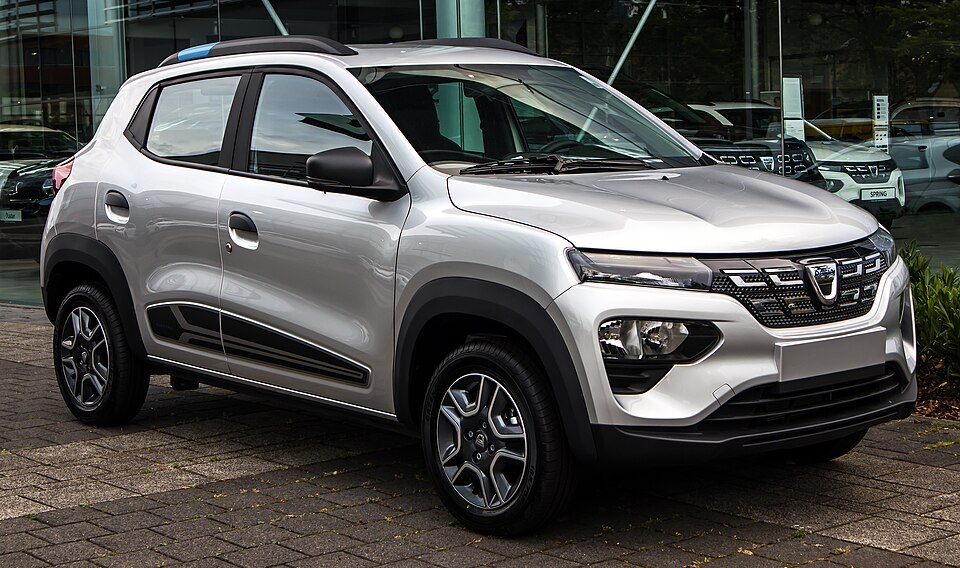
The first generation of the Spring is the first fully electric model sold under the Dacia marque. It was developed primarily for the European market and derives from the Renault City K-ZE, the electric version of the Renault Kwid. For European markets, the vehicle was extensively adapted to meet local safety and type-approval requirements.
Dacia initially planned a two-stage introduction for the Spring. During the first phase, the vehicle was offered to car-sharing and rental operators, allowing the manufacturer to gather user feedback and increase public exposure to its first electric model. Renault also used its Zity car-sharing service for this purpose, while leaving open the possibility of working with other operators. The second phase involved sales to private customers, with deliveries beginning in October 2021.
Reservations for private customers opened in March 2021, ahead of the start of deliveries.
History
Development of a European-market version of the Renault City K-ZE was publicly reported in October 2019. Gilles Normand, then director of Renault’s electric vehicle division, confirmed that a version intended for European export was under development. The project carried the internal codename BBG.
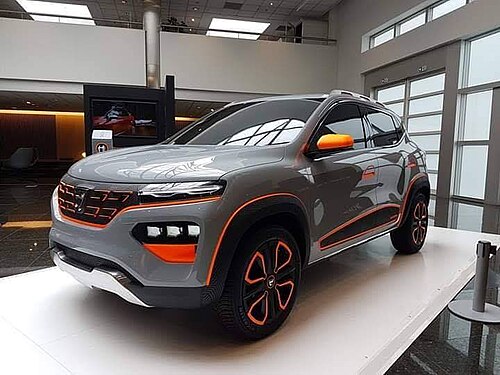
Dacia presented the Dacia Spring Electric concept on 3 March 2020.
The concept was originally scheduled to debut at the Geneva Motor Show in 2020. The event was cancelled because of the COVID-19 pandemic, and the vehicle was subsequently revealed during an online presentation. The concept car featured a grey body with contrasting neon-orange details on the wheels, door handles, exterior mirrors and front grille.
Overview
The production version of the Spring was unveiled during the Renault EWAYS conference on 15 October 2020, following a series of teaser images released by the manufacturer.
At launch, the Spring was offered in two configurations: a passenger version for private customers and a Business version intended for car-sharing operators. The two versions shared the same basic mechanical specification, with differences mainly concerning exterior details. The private version used orange accents and Dacia’s Y-shaped rear-light signature, whereas the Business model featured blue accents and rear lights derived from the Renault City K-ZE.
For the European market, the Spring received a reinforced chassis, six airbags and additional driver-assistance systems to meet local safety requirements. Its electric powertrain was also modified. The European model used a 27.4 kWh lithium-ion battery, compared with the 26.8 kWh unit fitted to the Chinese-market version. The initial claimed range was approximately 230 km (140 mi) under the WLTP cycle.
-
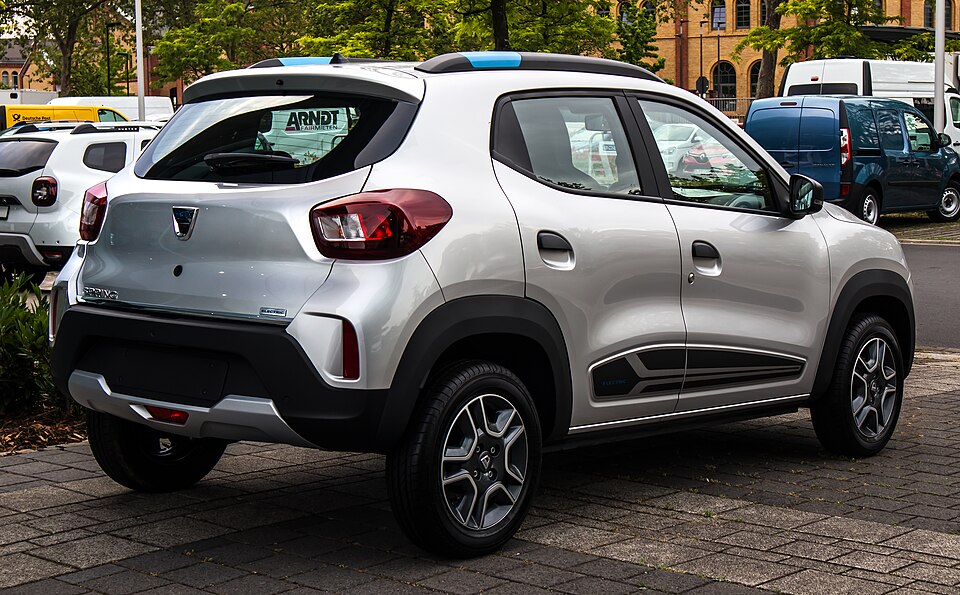 Rear view (Business)
 -
_interior.png) Interior (Business)
Interior (Business) -
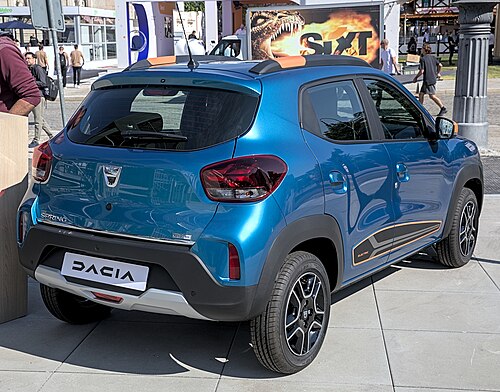 Rear view (customer version)
 -
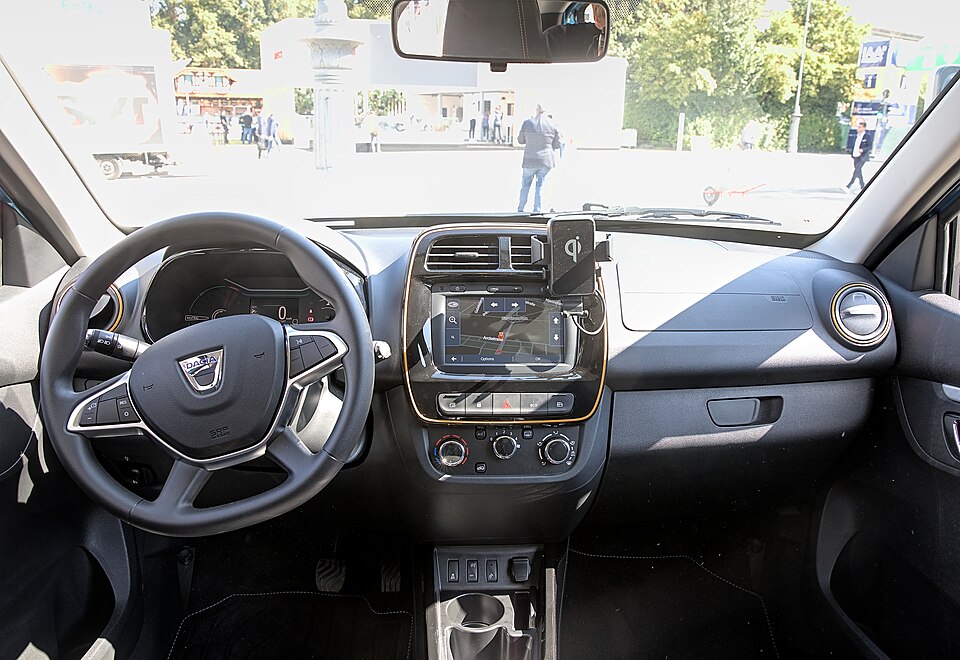 Interior (customer version)
Dacia Spring Cargo
The Dacia Spring Cargo is a commercial derivative designed for transporting goods. It was introduced in December 2020 and was initially offered exclusively in white.
Standard equipment included air conditioning, an audio system with Bluetooth connectivity, a USB port, provision for a mobile-phone holder, cloth upholstery and 14-inch steel wheels.
Instead of a rear passenger bench, the Cargo version has a dedicated load compartment separated from the front cabin by a metal partition. The cargo floor and wheel arches are protected by plastic coverings, while four tie-down rings are provided for securing loads. The usable load area measures 1,033 mm in length and has a volume of 800 L, with a maximum payload of 325 kg.
Refresh (2022)
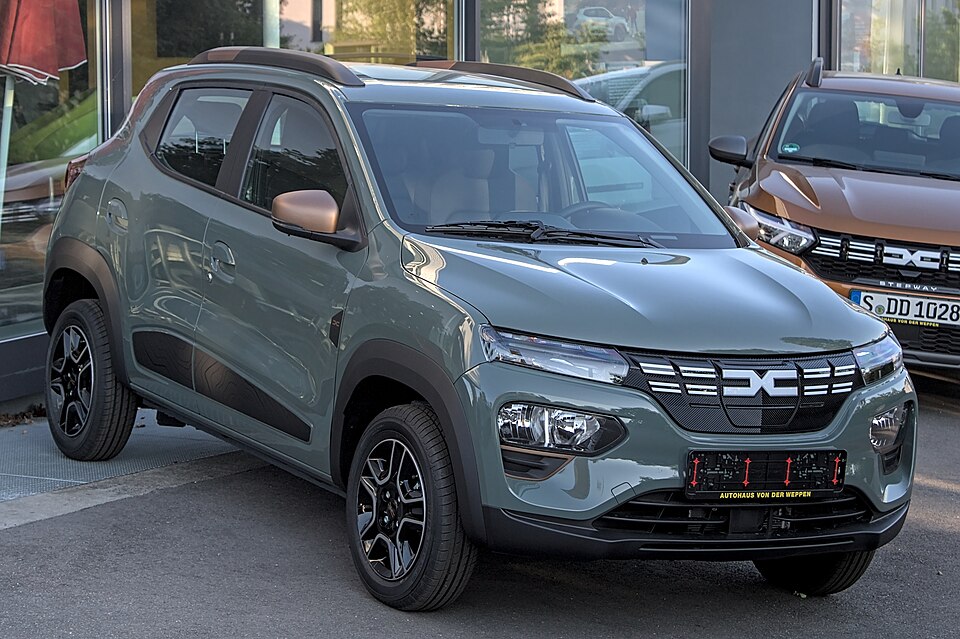
In June 2022, the Spring received a minor update as Dacia introduced a new visual identity across its model range. The revisions included changes to the front end and the adoption of the new Dacia logo, including its use at the rear of the vehicle.
The updated model retained the 33 kW electric motor and had a kerb weight of 970 kg. It remained approved for four occupants.
In January 2023, Dacia introduced the Dacia Spring Extreme, equipped with a more powerful 48 kW electric motor. Its claimed WLTP range was 220 km (140 mi).
The Dacia Spring Cargo was subsequently updated in March 2023 to incorporate Dacia’s revised visual identity. The commercial version remained limited to selected European markets, including Poland, the Czech Republic and Slovakia.
-
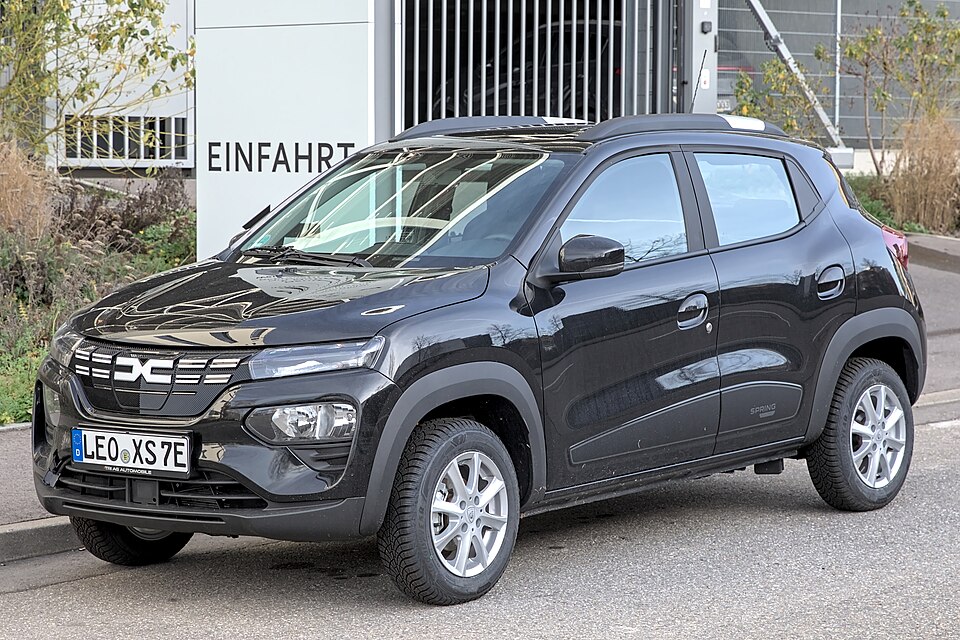 Spring Essential
 -
 Spring Extreme
Facelift (2024)
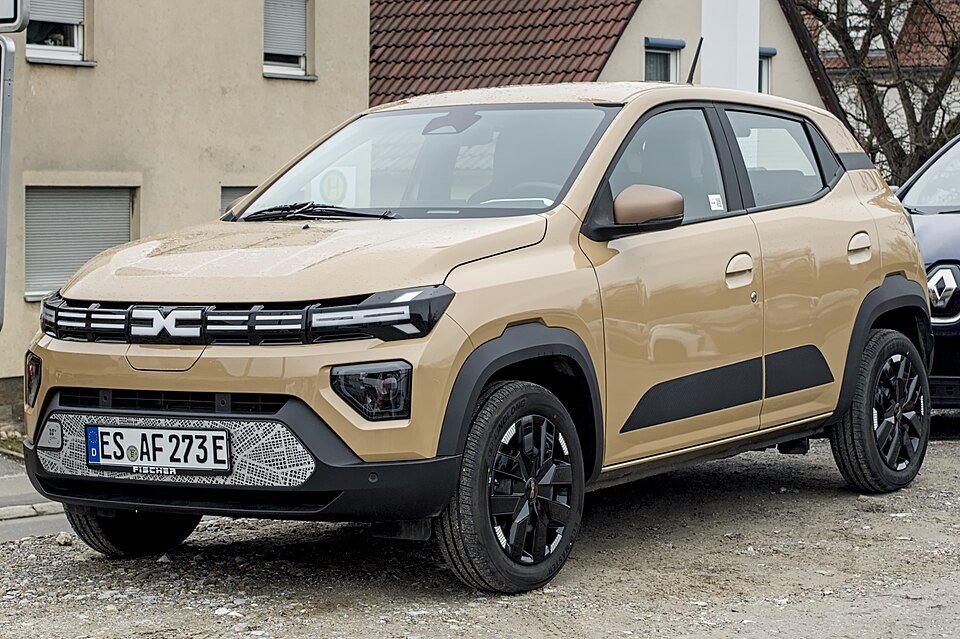
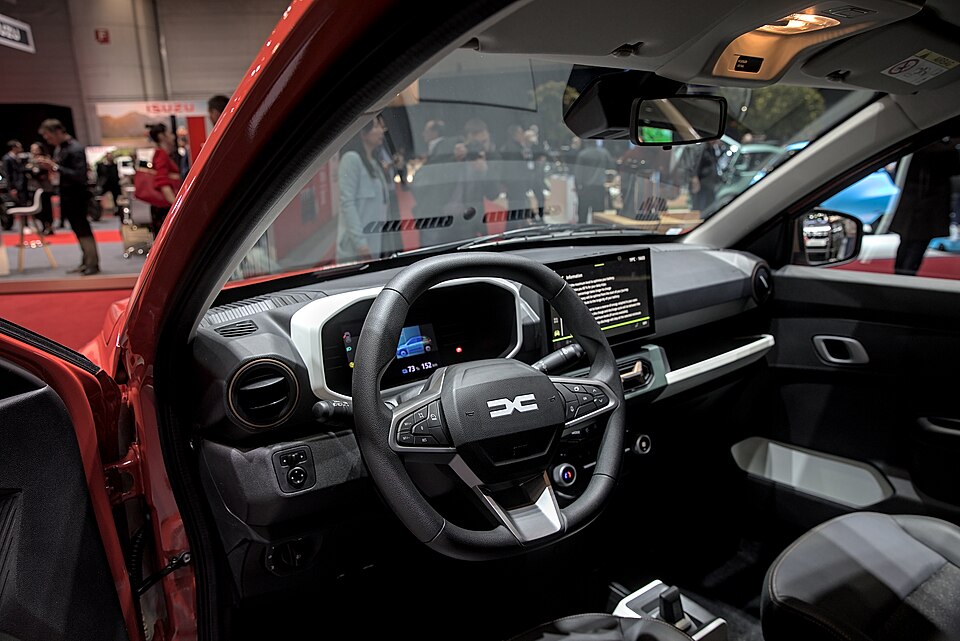
Dacia unveiled a substantially revised Spring on 21 February 2024. The facelift introduced redesigned front and rear sections, including new lighting units and styling intended to bring the model into line with Dacia’s contemporary design language.
In October 2025, Dacia introduced another technical update, replacing the previous 26.8 kWh battery with a 24.3 kWh lithium iron phosphate (LFP) battery. According to Dacia, the new battery contributed to greater chassis rigidity and a revised weight distribution. Despite its lower capacity, the WLTP range remained at 225 km, helped by aerodynamic improvements such as a revised underbody and a rear spoiler.
The powertrain lineup was also revised, with the Spring 45 replaced by the Spring 70 and the Spring 65 succeeded by the Spring 100. Dacia stated that the updated powertrain offered approximately 20% more mid-range torque than the outgoing version.
-
_%E2%80%93_f_08022026.jpg) Front view
Front view -
_%E2%80%93_h_08022026.jpg) Rear view
Rear view -
 Front view (Extreme)
 -
 Interior (Extreme)
Marketing
When the Spring was introduced, Dacia stated that it would not be sold in the United Kingdom because Renault had no immediate plans to develop a right-hand-drive version. Although the possibility of a right-hand-drive model had not been ruled out, its development was not considered a priority, particularly because the vehicle was manufactured in China for export to Europe. The Spring was consequently also absent from other European markets with left-hand traffic, including Ireland, Cyprus and Malta.
The situation changed with the 2024 facelift, when Dacia introduced a right-hand-drive version for the United Kingdom and Ireland.
Safety
The European-market Spring received a one-star rating from Euro NCAP following crash tests published in December 2021. Euro NCAP identified a high risk of serious injury in several areas, particularly involving the driver’s chest and the rear passenger’s head in frontal-impact tests, while protection of the chest in the side-impact test was assessed as marginal.
In 2022, Latin NCAP tested the Spring using a protocol that was more stringent than the organisation’s 2017 testing procedure. The 2022 Latin NCAP protocol was broadly comparable to the Euro NCAP procedure used in 2014, making it several generations older than the protocol applied by Euro NCAP to the Spring in 2021.
| Test | Points | % |
|---|---|---|
| Overall: |   |
|
| Adult occupant: | 18.9 | 49% |
| Child occupant: | 27.5 | 56% |
| Pedestrian: | 21.3 | 39% |
| Safety assist: | 5.2 | 32% |
Sales
| Market | Period | Units | Reference |
|---|---|---|---|
| Europe | 2021 | 17,398 | |
| Romania | 2021–2022 | 10,000 |
Second generation (B1325; 2027)
| Second generation | |
|---|---|
 |
|
| Overview | |
| Model code | B1325 |
| Production | 2027 (to commence) |
| Assembly | Slovenia: Novo Mesto (Revoz) |
| Body and chassis | |
| Class | City car (A) |
| Platform | AmpR Small / RGEV Small |
| Related | Renault Twingo E-Tech |
| Powertrain | |
| Electric motor | 60 kW (80 hp; 82 PS) |
| Battery | 27.5 kWh LFP |
| Range | 250 km (155 mi) (WLTP) |
| Plug-in charging | 6.6 kW AC (standard); 11 kW AC / 50 kW DC (optional) |
| Dimensions | |
| Length | 3,850 mm (151.6 in) |
| Width | 1,740 mm (68.5 in) |
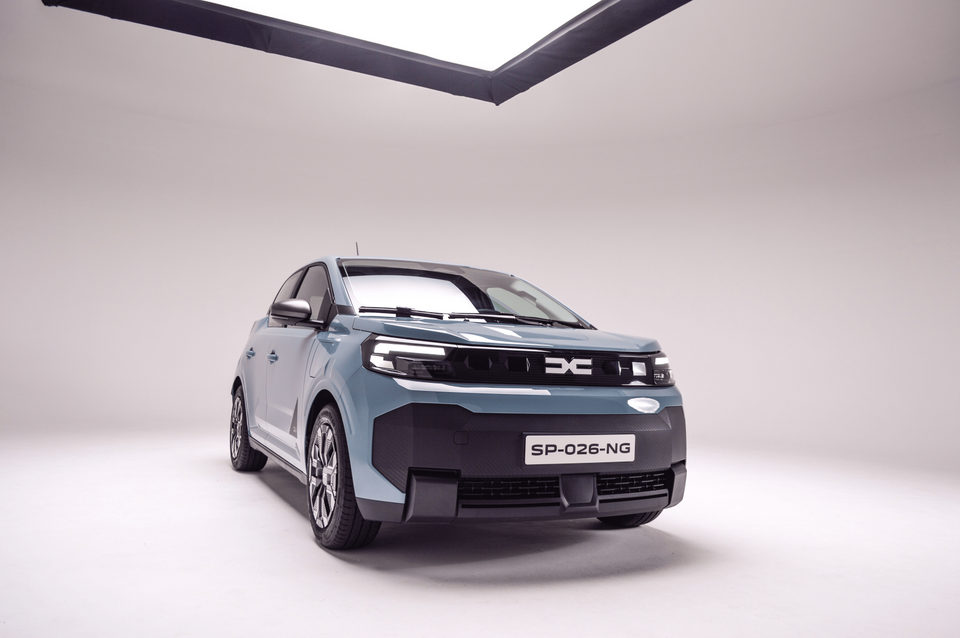
The second generation of the Spring was introduced on 8 September 2026. It marks the transfer of production from China to Europe, sharing its RGEV Small architecture with the Renault Twingo E-Tech and is produced at the Revoz plant in Novo Mesto, Slovenia. The model is marketed at under €20,000 across Europe before incentives, undercutting the Twingo E-Tech.
Development
The Dacia first teased the second-generation Spring with a sketch in February 2025, before confirming the retained Spring name and a targeted sub-€18,000 starting price on 18 June 2026. The car was developed in approximately 16 months, reusing existing AmpR Small / RGEV Small components and Renault Group’s European manufacturing infrastructure to control costs. The outgoing, China-built Spring had sold more than 210,000 units across over 40 countries since its 2021 launch.
Design
The second-generation Spring has a more upright design than its predecessor, with a higher bonnet, pronounced wheel arches, black trim linking the headlights and tail lights, and pop-out rear windows. It shares its underlying architecture with the Twingo E-Tech but has a distinct, boxier front clip; a narrow black panel houses the front lighting elements in place of the Twingo’s round headlamps. The car grew by 18 cm (7.1 in) in width and 15 cm (5.9 in) in length over its predecessor. The minimalist interior retains four full-size seats and physical buttons alongside a 7-inch digital instrument cluster and a 10.1-inch touchscreen.
Powertrain and equipment
The Spring uses a single 60 kW (80 hp; 82 PS) electric motor producing 175 N⋅m (129 lb⋅ft) of torque, giving a 0–100 km/h (0–62 mph) time of 12.1 seconds and a top speed of 130 km/h (81 mph). A 27.5 kWh lithium iron phosphate (LFP) battery provides a WLTP range of up to 250 km (155 mi), slightly less than the mechanically related Twingo E-Tech. Standard 6.6 kW AC charging takes the battery from 15–80% in nine hours, optional 11 kW AC charging reduces this to under two hours, and optional 50 kW DC fast charging allows a 15–80% charge in 28 minutes. Trunk capacity is 337 L (11.9 cu ft), expanding to 1,283 L (45.3 cu ft) with the 50:50 split rear seats folded, plus an optional 18 L (0.6 cu ft) front storage compartment.
Equipment includes wireless Apple CarPlay and Android Auto, connected navigation, Dacia’s YouClip accessory system, and optional vehicle-to-load (V2L) capability.
- Dacia Duster
- Dacia Sandero
Notes
- Official website (Romania)