Volvo ES90 Specs, Range, Battery, Dimensions & Features
Eletric Car Volvo ES90 Specs, Performance, Range, Dimensions & Features
| Volvo ES90 | |
|---|---|
 |
|
| Overview | |
| Manufacturer | Volvo Cars |
| Model code | V551 |
| Production | September 2025 – present |
| Assembly |
|
| Body and chassis | |
| Class | Executive car (E) |
| Body style | 5-door liftback |
| Layout |
|
| Platform | SPA2 |
| Related |
|
| Powertrain | |
| Electric motor | 2× permanent magnet synchronous |
| Power output |
|
| Battery |
|
| Electric range |
|
| Dimensions | |
| Wheelbase | 3,100 mm (122.0 in) |
| Length | 5,000 mm (196.9 in) |
| Width | 1,942 mm (76.5 in) |
| Height | 1,550 mm (61.0 in) |
| Kerb weight | 2,500–2,600 kg (5,512–5,732 lb) |
| Chronology | |
| Predecessor | Volvo S90 |
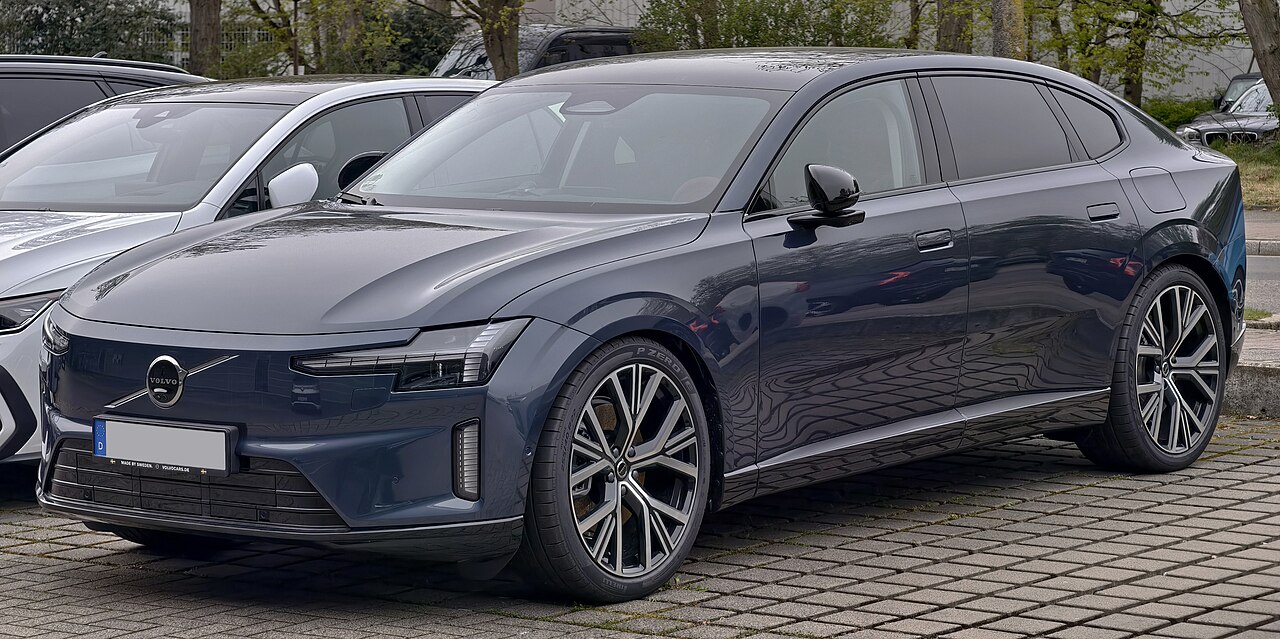
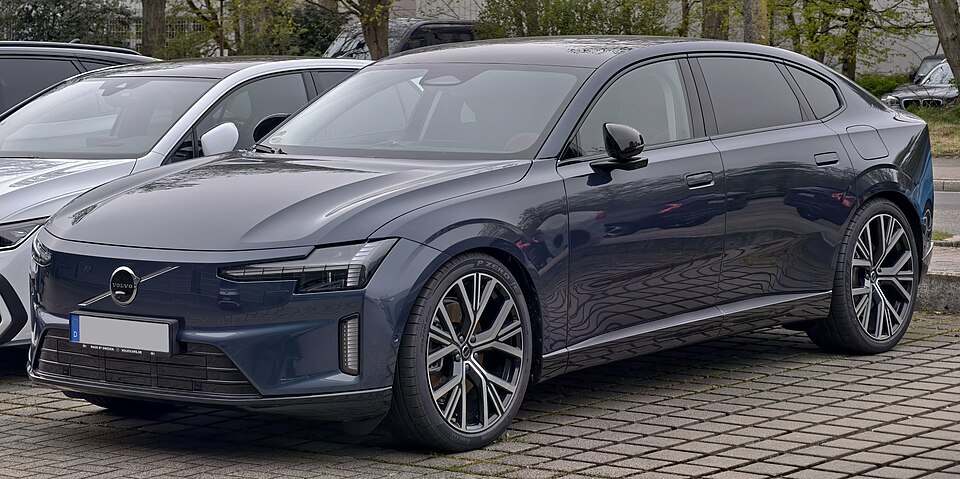
The Volvo ES90 (internal code V551) is a battery electric executive car produced by Swedish manufacturer Volvo from 2025. It was revealed on 5 March 2025.
Overview
The ES90 is based on the SPA2 platform dedicated to Volvo high-end vehicles, such as its SUV derivative EX90 or its cousin Polestar 3, and is the second Volvo product, after the EX90, to be based on its Superset tech stack. The ES90 was the first Volvo to feature a dual Nvidia Drive AGX Orin configuration, with the computer’s abilities to perform 508 trillion operations per second (TOPS). It has an 800-volt electric architecture that supports fast charging, which can add 300 km of electric range in 10 minutes at 350kW rapid charging stations. The ES90 features the same adaptive dampening system and dual-chamber air suspension found in the EX90.
Jeremy Offer, head of global design, claims the ES90 “adapted the saloon silhouette and added from a functional perspective a hatchback. But then working with the proportions of an electric platform, which has a higher driving position, we leveraged that and used that to our advantage, giving the car a higher stance and elevated driving position… [The ES90] is fundamentally a large saloon with these nuanced changes.”
According to Volvo, the ES90 is designed to combine “the refined elegance of a sedan, the adaptability of a fastback, and the spacious interior and higher ground clearance associated with SUVs”. The front fascia is distinguished by Thor’s hammer headlights, while the rear fascia features C-shaped LED taillights and LED lights placed on each side of the rear window. For customisation, customers can choose from seven exterior colours and four wheel options ranging from 20 to 22 inches in size. The ES90 has a low drag coefficient of 0.25, therefore it became the most aerodynamic Volvo product ever produced.
The interior can also be customised with six ambient lighting themes and a range of upholstery options. The dashboard has a 9-inch driver’s digital display, 14.5-inch touchscreen infotainment system with Google built-in services, and a standard heads-up display. The infotainment display also provides a 3D view supported by a 360-degree camera system. Interior features include a Bowers & Wilkins sound system with 25 speakers and Dolby Atmos, a four-zone automatic climate control with an advanced air purifier that removes up to 95% of PM 2.5 particulates, and a panoramic roof with 99.9% UV protection.
The ES90 has a boot capacity at 425 L (15.0 cu ft), and 1,256 L (44.4 cu ft) when the rear seats folded which can be folded separately in 40:20:40 format. It is available with a frunk storage compartment of 22 L (0.78 cu ft).
For safety, the ES90 features Safe Space Technology package includes one lidar, five radars, seven cameras, 12 ultrasonic sensors, and an advanced driver understanding system inside the car.
-
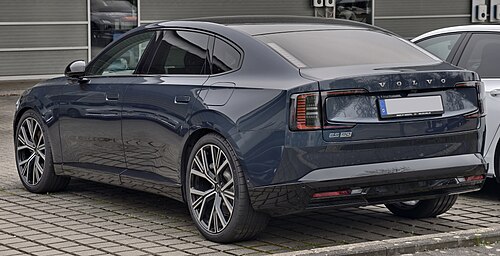 Rear view
 -
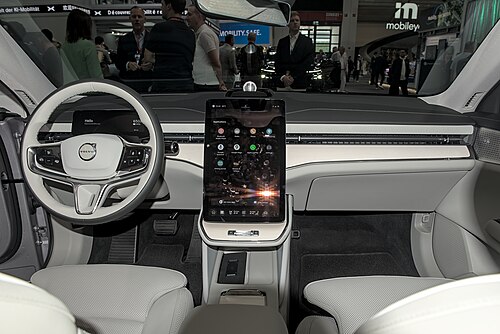 Interior
Powertrains
|
Spec
Model
|
Production | Battery | Battery capacity | DC Charging | Range (WLTP) | Power | Torque | 0–100 km/h (0–62 mph) | Top speed | Drive |
|---|---|---|---|---|---|---|---|---|---|---|
| Single Motor | 2025–present | CATL lithium ion | 88 kWh (usable)
92 kWh (gross) |
300 kW | 650 km (404 mi) | 245 kW (329 hp) | 480 N⋅m (354 lb⋅ft) | 6.9 s | 180 km/h (112 mph) | RWD |
| Twin Motor | 102 kWh (usable)
106 kWh (gross) |
350 kW | 700 km (435 mi) | 330 kW (443 hp) | 670 N⋅m (494 lb⋅ft) | 5.5 s | AWD | |||
| Twin Motor Performance | 500 kW (671 hp) | 870 N⋅m (642 lb⋅ft) | 4.0 s |
| Model | Battery | Power | Range | Top speed | Curb weight | |
|---|---|---|---|---|---|---|
| Type | Weight | CLTC | ||||
| Base | 77 kWh LFP | 636 kg (1,402 lb) | 322 hp (240 kW; 326 PS) | 608 km (378 mi) | 180 km/h (112 mph) | 2,365 kg (5,214 lb) |
| RWD | 92 kWh NMC | 599 kg (1,321 lb) | 329 hp (245 kW; 334 PS) | 777 km (483 mi) | 2,370 kg (5,225 lb) | |
| 720 km (447 mi) | 2,380 kg (5,247 lb) | |||||
| AWD | 106 kWh NMC | 662 kg (1,459 lb) | 671 hp (500 kW; 680 PS) | 848 km (527 mi) | 2,558 kg (5,639 lb) | |
| 815 km (506 mi) | 2,579 kg (5,686 lb) | |||||
- Official website (United Kingdom)
- Official website (United States)