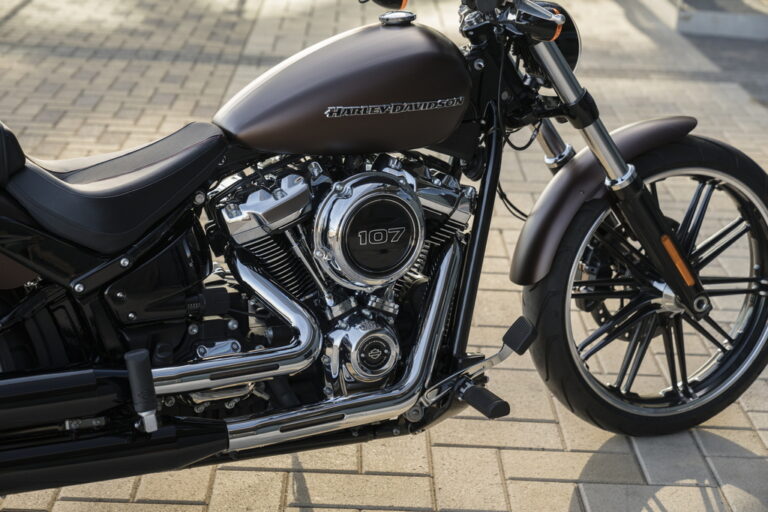
2004–2009 Harley-Davidson Sportster Evolution 883 (XL883 Standard Rubber)
Of course, here is a full article about the 2004–2009 Harley-Davidson Sportster Evolution 883.
The 2004–2009 Harley-Davidson Sportster Evolution 883 (XL883 Standard Rubber) represents a pivotal era for one of motorcycling’s most iconic lineages. This period marked the most significant redesign of the Sportster platform in decades, introducing a new frame and, most notably, a rubber-mounted engine. This evolution aimed to address long-standing criticisms of vibration while retaining the classic character that had defined the Sportster since its inception in 1957. The result was a motorcycle that served as a bridge between the raw, rigid-mount models of the past and the more refined cruisers of the modern era, solidifying its place as a popular entry point into the Harley-Davidson brand.
A Major Redesign for the New Millennium
Prior to 2004, the Sportster was famous—and for some, infamous—for its rigid-mounted Evolution engine. This design bolted the engine directly to the frame, transferring the V-twin’s signature vibrations directly to the rider. While enthusiasts praised this for its visceral and connected feel, it could be fatiguing on longer journeys.
The 2004 model year overhaul changed everything. Harley-Davidson introduced an all-new, stronger frame that incorporated a three-point rubber isolation system for the engine. This system allowed the engine to vibrate within the frame without transmitting the harshest frequencies to the handlebars, seat, and footpegs. The difference was immediately noticeable, transforming the Sportster into a much smoother and more comfortable motorcycle for daily riding and highway cruising. This redesign did come with a trade-off: the new frame and mounting system added approximately 50 pounds to the bike’s overall weight.
Another significant update occurred midway through this generation. From 2004 to 2006, the XL883 continued to use a carburetor for its fuel delivery. In 2007, in response to tightening emissions standards, Harley-Davidson transitioned the entire Sportster line, including the XL883, to sequential port Electronic Fuel Injection (EFI). The introduction of EFI provided more reliable cold starts, smoother throttle response, and improved fuel efficiency, though some traditionalists missed the mechanical simplicity and tunability of the carburetor.
The 2004–2009 Harley-Davidson Sportster Evolution 883 (XL883 Standard Rubber) Riding Experience
At the heart of the XL883 is the air-cooled 883cc Evolution V-twin engine. While not a powerhouse by modern standards, its performance is characterized by strong low-end torque, making it feel responsive and capable in city traffic. The engine is celebrated for its reliability and its classic, rumbling exhaust note that is quintessentially Harley-Davidson.
The standard XL883 featured a neutral, upright riding position with mid-mount foot controls that suited a wide range of riders. Its relatively low seat height and manageable size made it an accessible option for new or shorter riders. The redesigned frame not only improved comfort but also enhanced stability and handling, making the 2004-2009 models feel more planted and predictable than their predecessors.
This generation of the Sportster 883 solidified its reputation as a “blank canvas” for customization. The simple, clean lines of the standard model made it an ideal base for personalization. Owners could easily modify it into a bobber, chopper, café racer, or touring-capable cruiser, supported by a massive aftermarket industry that supplied everything from exhaust systems and seats to complete engine upgrade kits. The popular “1200 upgrade,” which involved increasing the engine’s displacement, was a common modification for owners seeking more power.
Model Variants
While the XL883 Standard was the foundational model, Harley-Davidson also offered several variants during this period to appeal to different tastes:
XL883C (Custom): Featured more chrome, a larger 4.5-gallon fuel tank, forward foot controls, and a 21-inch laced front wheel for a classic cruiser look.
XL883L (Low): Introduced in 2005, this model was designed for maximum accessibility with a significantly lower seat height, achieved through revised suspension and a different seat.
XL883R:** Inspired by Harley-Davidson’s flat-track racing heritage, this model featured dirt-track style graphics, a 2-into-1 exhaust, and blacked-out components.
Specifications
| General | |
| Brand | Harley-Davidson |
| Model | Sportster |
| Model Class | XL883 |
| Model Year | 2004-2009 |
| Type | Standard / Cruiser |
| Maximum mass (GVWR) | 1000 lb. (453 kg) |
| Maximum passengers | 2 |
| Performance | |
| Max. power | Approx. 53 Hp / 6000 RPM |
| Max. torque | 51 ft-lb (69 N•m) / 4300 RPM |
| Top designed speed | Approx. 105 mph (169 km/h) |
| Size | |
| Length | 89.1 in. (2263 mm) |
| Width | 33.7 in. (856 mm) |
| Height | 45.7 in. (1161 mm) |
| Wheelbase | 60.0 in. (1524 mm) |
| Seat height (laden) | 27.3 in. (693 mm) |
| Ground clearance | 4.4 in. (112 mm) |
| Curb weight | Approx. 583 lb. (264 kg) |
| Engine | |
| Type | Air-cooled, 45° V-Twin, Four Stroke, OHV |
| Displacement | 883 cc (53.9 cu in) |
| Bore × Stroke | 3.00 in. × 3.81 in. (76.2 mm × 96.8 mm) |
| Compression ratio | 8.9: 1 |
| Starting system | Electric starter |
| Fuel supplying system | Carburetor (2004-2006) / EFI (2007-2009) |
| Ignition control system | Electronic |
| Lubricating system | Dry sump |
| Oil capacity | 2.8 qt (2.6 L) |
| Engine oil type | SAE 20W-50 |
| Idle speed | 1000 RPM ± 50 RPM |
| Transmission | |
| Transmission type | 5-speed, manual gear shift |
| Clutch type | Wet, multi-disc, manual |
| Driving system | Belt drive |
| Primary reduction ratio | 1.676 |
| Final reduction ratio | 2.267 |
| Gear ratio | 1st: 2.648; 2nd: 1.892; 3rd: 1.407; 4th: 1.181; 5th: 1.000 |
| Chassis | |
| Tire size | Front: 100/90-19; Rear: 150/80B16 |
| Rim size | Front: 19 in; Rear: 16 in |
| Capacity of fuel tank | 3.3 gal (12.5 L) |
| Fuel consumption | Approx. 45-50 mpg (5.2-4.7 L / 100 km) |
| Electric | |
| Battery | 12V / 12 Ah |
| Headlight | Halogen |
| Shock Absorbers | |
| Front travel | 5.6 in (141 mm) |
| Rear travel | 4.1 in (104 mm) |
| Rear spring preload | Adjustable |