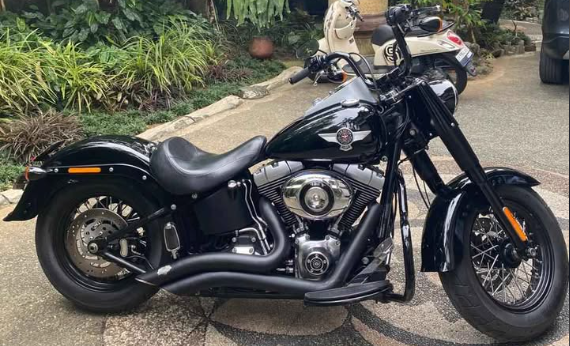
2017–2024 Harley-Davidson Trike Milwaukee-Eight 114 (FLRT Freewheeler)
The Harley-Davidson Trike Milwaukee-Eight 114 (FLRT Freewheeler) is a three-wheeled motorcycle produced by Harley-Davidson from the 2017 model year through 2024. Designed with a stripped-down, hot-rod aesthetic, the Freewheeler offers a distinct alternative to the company’s fully-dressed Tri Glide Ultra model. It combines the open-air freedom of a motorcycle with the stability of a three-wheel platform, powered by the torque-rich Milwaukee-Eight 114 engine. The Freewheeler appeals to riders seeking a comfortable, powerful, and easy-to-handle machine for both city cruising and long-distance touring.
Development and Design
The Freewheeler was introduced to provide a more nimble and minimalist option in Harley-Davidson’s trike lineup. Its design language is characterized by custom-inspired styling cues, including mini ape-hanger handlebars that place the rider in an upright, commanding position. The rear of the vehicle features distinctive bobtail fenders that expose the rear wheels, contributing to its muscular stance.
Unlike its touring-focused sibling, the Tri Glide, the Freewheeler forgoes a large fairing, tour-pak, and extensive infotainment system in favor of a clean, uncluttered look. It features a simple headlight nacelle and a weatherproof rear trunk that sits between the fenders, offering practical storage space without compromising the vehicle’s streamlined profile. The seating is designed for a single rider, although a passenger pillion can be added.
Powertrain: The Harley-Davidson Trike Milwaukee-Eight 114
At the core of the 2017–2024 FLRT Freewheeler is the Milwaukee-Eight 114 engine. This V-Twin powerplant has a displacement of 114 cubic inches (1,868 cc) and is known for its massive low-end torque, which is essential for propelling the heavier three-wheeled chassis. The engine features a four-valve-per-cylinder head design and dual spark plugs, promoting more efficient combustion and improved performance over its predecessor.
A key feature of the Milwaukee-Eight is its single internal counter-balancer, which cancels 75% of primary vibration at idle. This results in a smoother ride, particularly at stops and low speeds, enhancing rider comfort without completely eliminating the signature Harley-Davidson feel. The engine is air-cooled with precision oil cooling directed at the hottest areas around the exhaust valves, ensuring consistent performance even under demanding conditions. Power is delivered to the rear wheels through a 6-speed Cruise Drive transmission and a belt final drive.
Differences From the Previous Model
The introduction of the Milwaukee-Eight engine marked a significant upgrade from the High Output Twin Cam 103 engine used in earlier Freewheeler models (2015-2016). The primary differences include:
Increased Performance: The Milwaukee-Eight 114 produces substantially more torque and horsepower, resulting in quicker acceleration and better passing power.
Improved Heat Management: The precision cooling system more effectively dissipates heat from the engine, increasing comfort for the rider and passenger, especially in slow-moving traffic.
Smoother Operation: The internal counter-balancer significantly reduces engine vibration at idle, creating a more refined experience.
Enhanced Charging System: The Milwaukee-Eight features a charging system with a 50% higher output at idle to better support the demands of modern accessories and electronics.
Chassis and Rider Safety Enhancements
The Freewheeler is built on a frame specifically engineered for the dynamics of a three-wheeled vehicle. It features 49mm front forks and a straight-cut gearbox with an electric reverse gear, which simplifies parking and low-speed maneuvers. The braking system is linked, meaning that applying either the front or rear brake pedal activates braking on all three wheels, providing balanced and confident stopping power.
Beginning in 2020, the Freewheeler became available with Harley-Davidson’s optional Reflex Defensive Rider Systems (RDRS). This suite of electronic aids uses an Inertial Measurement Unit (IMU) to enhance rider control, especially in adverse conditions. Key RDRS features include Cornering Enhanced Antilock Braking System (C-ABS), Cornering Enhanced Traction Control System (C-TCS), and Drag-Torque Slip Control System (DSCS).
***
Specifications Table: 2023 FLRT Freewheeler
| General | |
| Brand | Harley-Davidson |
| Model | Freewheeler |
| Model Class | FLRT |
| Model Year | 2017–2024 |
| Type | Trike |
| Gross Vehicle Weight Rating | 1,700 lb. (771 kg) |
| Maximum passengers | 2 |
| Performance | |
| Max. power | N/A (Harley-Davidson does not typically publish horsepower figures) |
| Max. torque | 122 ft-lb (165 N•m) / 2750 RPM |
| Size | |
| Length | 103 in. (2,615 mm) |
| Width | 55.3 in. (1,405 mm) |
| Height | 44.9 in. (1,140 mm) |
| Wheelbase | 65.7 in. (1,670 mm) |
| Seat height (laden) | 26.2 in. (665 mm) |
| Ground clearance | 4.9 in. (125 mm) |
| Curb weight (in running order) | 1,080 lb. (489 kg) |
| Engine | |
| Type | Milwaukee-Eight 114, V-Twin, 45°, Four Stroke, Air/Oil Cooled |
| Displacement | 114 cu in (1,868 cc) |
| Bore × Stroke | 4.016 in. × 4.5 in. (102 mm × 114.3 mm) |
| Compression ratio | 10.5:1 |
| Starting system | Electric starter |
| Fuel supplying system | Electronic Sequential Port Fuel Injection (ESPFI) |
| Exhaust | 2-1-2 dual exhaust with tapered mufflers |
| Oil capacity (with filter) | 5.2 qt (4.9 L) |
| Transmission | |
| Transmission type | 6-speed Cruise Drive, with electric reverse |
| Clutch type | Mechanically actuated 10 plate wet, assist & slip |
| Driving system | Belt drive |
| Chassis | |
| Tire size | Front: MT 130/60B19 M/C 61H; Rear: P205/65R15 |
| Rim type | Enforcer Cast Aluminum |
| Capacity of fuel tank | 6.0 gal (22.7 L) |
| Fuel consumption (est.) | 43 MPG (5.5 L / 100 km) |
| Electric & Brakes | |
| Battery | 12V / 28 Ah |
| Headlight | LED |
| Tail/Stop/Turn Signals | Incandescent bulbs |
| Brakes | Front: 32mm, 4-piston fixed; Rear: 36mm floating piston, integrated park brake |
| Braking System | Linked Brakes, standard ABS |