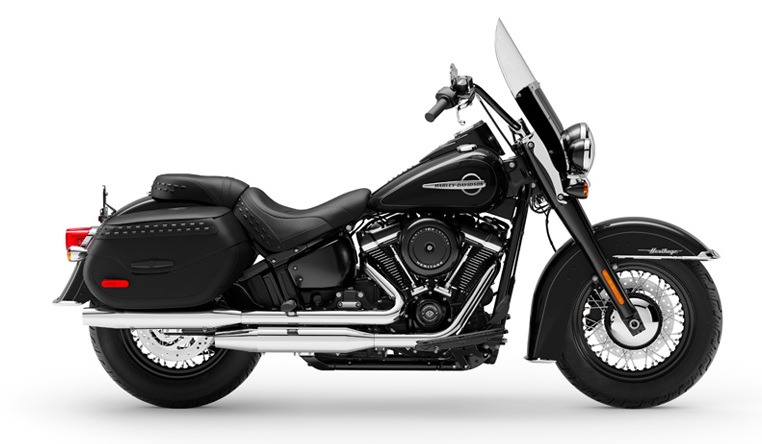
The 1986–2003 Harley-Davidson Sportster Evolution 883 (XLH883 Rigid Mount) represents one of the most significant and enduring eras in the history of the iconic American motorcycle. Spanning 18 model years, this generation solidified the Sportster’s reputation as a versatile and accessible entry point into the Harley-Davidson brand, while introducing a powerplant that would define the model for decades. It marked a crucial transition from the previous, maintenance-intensive Ironhead engine to the vastly more reliable and modern Evolution engine, setting a new standard for performance and longevity in Harley-Davidson’s longest-running model family.
Development and The Evolution Engine
The primary distinction between the 1986 XLH883 and its predecessors was the introduction of the Evolution (or “Evo”) engine. The previous “Ironhead” Sportster engine, in production since 1957, was known for its mechanical character but also for its tendency to leak oil, require frequent valve adjustments, and run hot. The Evolution engine was a revolutionary step forward, featuring aluminum cylinders and heads over the Ironhead’s cast iron. This change offered significantly better heat dissipation, tighter tolerances, and improved reliability.
The 883cc V-twin retained the classic 45-degree architecture and four-cam design that was a hallmark of the Sportster line. However, the new materials and engineering resulted in a lighter, more efficient, and far more durable motor. This powertrain provided riders with the signature Harley-Davidson sound and feel but with greatly reduced maintenance demands, making ownership more practical for a wider audience.
The Rigid Mount Sportster Evolution 883 Chassis and Drivetrain
A defining characteristic of this era is the “rigid mount” frame. The Evolution engine was bolted directly to the steel frame without any rubber dampers or counter-balancers. This design provided a direct and visceral connection between the rider, the engine, and the road, delivering the raw, vibrating experience that many purists celebrate. While this feedback was prized by some, it also meant that engine vibrations were transmitted through the handlebars, seat, and footpegs, particularly at highway speeds. This would later be addressed with the introduction of a rubber-mounted frame in 2004.
The drivetrain also saw significant upgrades during this period. Early models from 1986 to 1990 were equipped with a four-speed transmission. In 1991, a major update introduced a five-speed transmission, which improved highway cruising by lowering engine RPM at higher speeds. Another key change occurred in 1993 when Harley-Davidson replaced the final drive chain with a quieter, cleaner, and lower-maintenance belt drive system on most Sportster models.
Key Updates and Model Variations
Throughout its 18-year production run, the XLH883 received several incremental but important updates that refined the platform.
1988: The original butterfly carburetor was replaced with a 40mm constant velocity (CV) carburetor, which offered smoother throttle response and improved rideability. The front suspension was also upgraded from 35mm to more robust 39mm forks.
1991: Along with the five-speed gearbox, the alternator was moved from the engine crankcase to the crankshaft spline, simplifying the system.
Mid-1990s: Various electrical components were updated, including the introduction of a new oil tank, battery tray, and brake systems.
2000: The model year 2000 saw the introduction of improved four-piston brake calipers and sealed wheel bearings, further enhancing performance and reducing maintenance.
The standard XLH883 was often complemented by the XLH883 “Hugger,” a variant featuring a lower seat height, shorter suspension, and pullback handlebars, making it more accessible to shorter riders.
Legacy
The 1986-2003 Sportster 883 became a cornerstone of Harley-Davidson’s lineup. Its combination of classic styling, a reliable engine, and a relatively affordable price point made it a massive commercial success. It served as the gateway for countless new riders into the world of V-twin motorcycling. Furthermore, its simple and robust design made it an immensely popular platform for customization, serving as the basis for everything from bobbers and choppers to cafe racers. The availability of “883 to 1200” big bore conversion kits also offered a clear and popular upgrade path for owners seeking more performance, cementing its legacy as a truly versatile motorcycle.
Specifications Table: Harley-Davidson XLH 883 Sportster (1991-2003)
| General | |
| Brand | Harley-Davidson |
| Model | Sportster |
| Model Class | XLH 883 |
| Model Year | 1986–2003 |
| Type | Standard / Cruiser |
| Maximum passengers | 2 |
| Performance | |
| Max. power | ~50 Hp (37 kW) / 6000 RPM |
| Max. torque | ~48 ft-lb (65 N•m) / 4500 RPM |
| Top designed speed | ~100 mph (160 km/h) |
| Size | |
| Length | 87.6 in. (2225 mm) |
| Width | 33.7 in. (855 mm) |
| Height | 46.9 in. (1191 mm) |
| Wheelbase | 60.0 in. (1524 mm) |
| Seat height | 28.0 in. (711 mm) |
| Ground clearance | 6.7 in. (170 mm) |
| Curb weight | ~520 lb. (236 kg) |
| Engine | |
| Type | 45° V-Twin, 4-Stroke, Air-Cooled, OHV Evolution |
| Displacement | 883 cc (53.9 cu in) |
| Bore × Stroke | 3.00 in. × 3.81 in. (76.2 mm × 96.8 mm) |
| Compression ratio | 9.0:1 |
| Starting system | Electric starter |
| Fuel supplying system | 40mm Constant Velocity (CV) Carburetor |
| Ignition control system | Electronic |
| Lubricating system | Dry sump |
| Oil capacity | 3.0 qt (2.8 L) |
| Engine oil type | SAE 20W-50 |
| Idle speed | 950-1050 RPM |
| Transmission | |
| Transmission type | 4-speed (1986-1990), 5-speed (1991-2003), manual |
| Clutch type | Wet, multi-disc, manual |
| Driving system | Chain drive (1986-1992), Belt drive (1993-2003) |
| Chassis | |
| Tire size | Front: 100/90-19; Rear: 130/90-16 |
| Rim size | Front: 19 in.; Rear: 16 in. |
| Capacity of fuel tank | 3.3 gal (12.5 L) |
| Fuel consumption | ~48 mpg (4.9 L / 100 km) |
| Electric | |
| Battery | 12V |
| Headlight | Halogen |
| Suspension | |
| Front Suspension | 39mm telescopic fork |
| Rear Suspension | Dual coil-over shock absorbers, preload adjustable |
| Front travel | 6.1 in (155 mm) |
| Rear travel | 3.0 in (76 mm) |