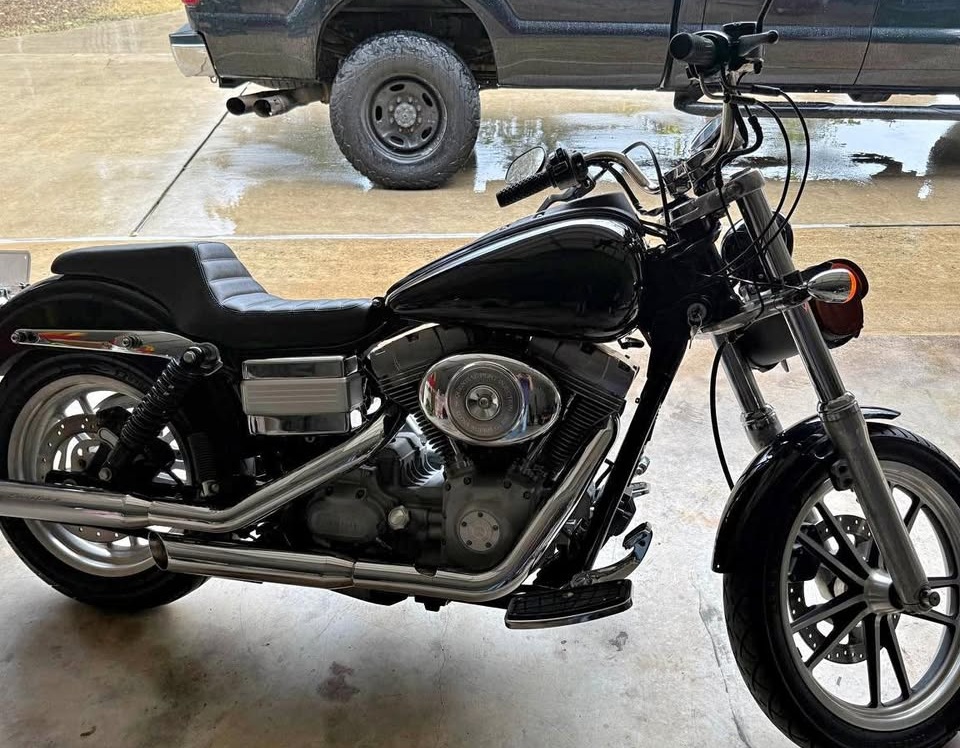
The 1999–2005 Harley-Davidson Dyna Twin Cam 88 (FXDX Super Glide Sport) is a cruiser motorcycle renowned for its unique blend of traditional Harley-Davidson styling and enhanced performance characteristics. Introduced at a pivotal moment for the company, the FXDX was part of the first wave of models to feature the then-new Twin Cam 88 engine. It quickly carved out a niche as the best-handling Big Twin of its era, appealing to riders who demanded more agility and braking power than what was typically offered in the cruiser market. The Super Glide Sport’s combination of a potent engine, an agile chassis, and adjustable suspension created a cult following that continues to this day.
Development and a New Engine
The introduction of the FXDX Super Glide Sport coincided with Harley-Davidson’s most significant powertrain update in decades: the transition from the venerable Evolution engine to the Twin Cam 88. The previous Evolution engine, which had powered Big Twin models since 1984, was a single-cam, 1340cc (80 cubic inch) V-twin. In contrast, the new Twin Cam 88 engine, launched for the 1999 model year in the Dyna and Touring lines, represented a major step forward.
As its name implies, the Twin Cam featured two chain-driven camshafts in the crankcase to actuate the valvetrain, allowing for straighter pushrod angles and higher-revving capabilities. Displacement was increased to 1450cc (88 cubic inches), and the engine featured improved cooling through larger fin areas and internal oil jets that sprayed the bottom of the pistons. This resulted in a noticeable increase in both horsepower and torque, providing stronger acceleration and better overall performance compared to its predecessor. The Dyna frame, which isolated the rider from engine vibrations via its rubber-mounting system, was the ideal platform to showcase this more powerful and smoother engine.
Defining Features of the FXDX Super Glide Sport
What set the FXDX Super Glide Sport apart from other models in the Dyna lineup, such as the standard Super Glide (FXD) or the Wide Glide (FXDWG), was its clear focus on performance and handling. Harley-Davidson equipped it with components not found on its more style-focused brethren.
Suspension and Brakes
The most significant feature of the FXDX was its premium, fully adjustable suspension. Both the front cartridge-style forks and the dual rear shock absorbers were manufactured by Showa and offered adjustments for preload, compression, and rebound damping. This level of tunability was a rarity on a production Harley-Davidson and allowed riders to dial in the handling to suit their weight and riding style, from comfortable cruising to aggressive cornering.
To complement the upgraded suspension, the braking system was also enhanced. The FXDX came standard with triple-disc brakes, featuring dual floating discs at the front and a single disc at the rear. This setup provided significantly more stopping power and better feel than the single-disc front brakes found on many other Harley models of the time.
Rider Ergonomics and Styling
The FXDX featured a more aggressive, standard riding posture with mid-mounted foot controls and a low-rise, flat handlebar. This ergonomic triangle placed the rider in a position of control, ideal for spirited riding. Aesthetically, the Super Glide Sport adopted a minimalist, blacked-out theme. The engine, transmission cover, and other components were finished in black powder coat instead of traditional chrome, giving the bike a purposeful, no-nonsense look that has since become a major influence on the “club style” custom motorcycle scene. A tachometer, often an optional accessory on other models, was standard equipment on the FXDX, further emphasizing its performance-oriented nature.
Market Reception and Legacy
Upon its release, the FXDX Super Glide Sport was praised by motorcycle journalists and experienced riders for bringing a new level of handling prowess to the American V-twin market. It was often called the “rider’s Harley,” a machine built for those who valued carving corners as much as cruising boulevards.
Production of the carbureted FXDX ended in 2005. While subsequent Dyna models continued, none captured the specific combination of fully adjustable suspension, triple-disc brakes, and minimalist styling in the same way. Over the years, the FXDX has become a highly sought-after model in the used market. Its reputation as a capable and versatile platform has made it a favorite for customization, particularly within the performance cruiser community.
Specifications
| General | |
| Brand | Harley-Davidson |
| Model | Dyna Super Glide Sport |
| Model Class | FXDX |
| Model Year | 1999–2005 |
| Type | Cruiser |
| Performance | |
| Max. power | ~68 Hp (50.7 Kw) / 5200 RPM |
| Max. torque | 81.9 ft-lb (111 N•m) / 3100 RPM |
| Size | |
| Length | 91.1 in. (2314 mm) |
| Width | 33.9 in. (861 mm) |
| Height | 48.5 in. (1232 mm) |
| Wheelbase | 62.5 in. (1588 mm) |
| Seat height | 27.0 in. (686 mm), laden |
| Ground clearance | 5.6 in. (142 mm) |
| Dry weight | 613 lb. (278 kg) |
| Engine | |
| Type | Twin Cam 88, 45° V-Twin, Air Cooled, Four Stroke |
| Displacement | 1450 cc (88.5 cu in) |
| Bore × Stroke | 3.75 in. × 4.00 in. (95.3 mm × 101.6 mm) |
| Compression ratio | 8.9:1 |
| Starting system | Electric starter |
| Fuel supplying system | Carburetor, 40 mm constant velocity with enricher and accelerator pump |
| Lubricating system | Dry-sump |
| Engine oil type | SAE 20W-50 Harley-Davidson H-D 360 |
| Transmission | |
| Transmission type | 5-speed, manual gear shift |
| Clutch type | Wet, multi-disc, manual |
| Driving system | Belt drive |
| Primary reduction ratio | 1.440 (36/25) |
| Final reduction ratio | 2.188 (70/32) |
| Gear ratio | 1st: 10.110; 2nd: 6.958; 3rd: 4.953; 4th: 3.862; 5th: 3.150 |
| Chassis | |
| Tire size | Front: 100/90-19 57H; Rear: 150/80B16 71H |
| Brakes | Front: Dual 292 mm disc; Rear: Single 292 mm disc |
| Capacity of fuel tank | 4.9 gal (18.5 L) |
| Fuel consumption | ~48 MPG (Highway), ~42 MPG (City) |
| Electric | |
| Battery | 12V / 19 Ah |
| Ignition | Single-fire, non-wasted, map-controlled spark ignition |
| Suspension | |
| Front Suspension | 39mm Showa forks with adjustable preload, compression, and rebound damping |
| Rear Suspension | Dual Showa shock absorbers with adjustable preload, compression, and rebound damping |