2026 Harley-Davidson CVO Touring Variants Maintenance Schedule
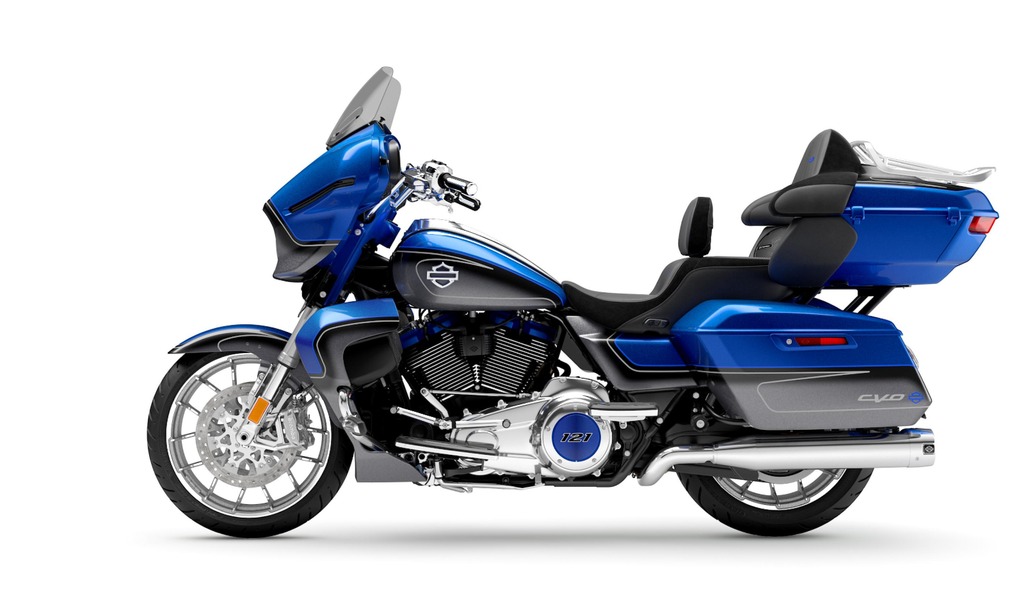
Harley-Davidson’s CVO (Custom Vehicle Operations) lineup takes the Street Glide and Road Glide platforms and adds premium paint, electronics, and trim — but under the surface, these four 2026 CVO Touring models share essentially the same factory maintenance structure. Here’s one complete reference covering all of them, with the one meaningful difference between the “base” CVO pair and the “ST” pair called out clearly.
Which Models This Covers
| Model | Code |
|---|---|
| CVO Street Glide | FLHXSE |
| CVO Street Glide Limited | FLHXLSE |
| CVO Street Glide ST | FLHXSTSE |
| CVO Road Glide ST | FLTRXSTSE |
How Often Do These Models Need Service?
All four follow the standard H-D interval pattern: a break-in service at 1,000 miles (1,600 km), then a checkpoint every 5,000 miles (8,000 km) through 50,000 miles (80,000 km).
The One Key Difference: Spoke Wheels
- CVO Street Glide (FLHXSE) and CVO Street Glide Limited (FLHXLSE) run on cast wheels — their factory charts have no spoke tension check at any interval.
- CVO Street Glide ST (FLHXSTSE) and CVO Road Glide ST (FLTRXSTSE) include a front/rear spoke tightness check at 1,000, 5,000, and 20,000 miles, then every 15,000 miles after that — consistent with their spoked-wheel option.
Everything else across the four models — engine, brake, drive belt, and electrical service points — follows the same pattern.
Maintenance Schedule Table (All Four Models)
| Mileage (mi / km) | Engine & Drivetrain | Brakes & Wheels | Chassis & Controls | Spoke Check (ST models only) |
|---|---|---|---|---|
| 1,000 mi (1,600 km) | Engine oil & filter change; replace primary chaincase and transmission lubricant; inspect oil/brake lines | Check tire pressure and tread; inspect brake pads/discs and fluid level/moisture content; torque-check front axle nut | Adjust clutch cable; torque-check switch housing and handlebar clamps; lubricate jiffy stand | ✓ Front & rear |
| 5,000 mi (8,000 km) | Oil & filter change; inspect fuel lines and fittings | Full brake inspection | Lubricate brake and clutch controls; check rear axle nut torque | ✓ Front & rear |
| 10,000 mi (16,000 km) | Oil & filter change; inspect exhaust system, fasteners and shields | Brake and tire inspection | Standard chassis and control checks | — |
| 15,000 mi (24,000 km) | Oil & filter change; drive belt inspection/adjustment | Brake and tire inspection | Standard chassis and control checks | — |
| 20,000 mi (32,000 km) | Oil & filter change | Brake and tire inspection | Standard chassis and control checks | ✓ Front & rear |
| 25,000 mi (40,000 km) | Oil & filter change; primary chaincase and transmission lubricant service | Brake and tire inspection | Standard chassis and control checks | — |
| 30,000 mi (48,000 km) | Oil & filter change; replace spark plugs (2-year/30k-mile item) | Brake and tire inspection | Standard chassis and control checks | — |
| 35,000 mi (56,000 km) | Oil & filter change; drive belt inspection/adjustment | Brake and tire inspection | Standard chassis and control checks | ✓ Front & rear |
| 40,000 mi (64,000 km) | Oil & filter change | Brake and tire inspection | Standard chassis and control checks | — |
| 45,000 mi (72,000 km) | Oil & filter change; drive belt inspection/adjustment | Brake and tire inspection | Standard chassis and control checks | — |
| 50,000 mi (80,000 km) | Oil & filter change; primary chaincase and transmission lubricant service | Full brake system service | Standard chassis and control checks | ✓ Front & rear |
Time-Based & Usage-Based Services
- Brake fluid (DOT 4): Flush and replace roughly every 2 years, or sooner if moisture content tests at 3% or higher.
- Battery: Check terminals, torque, and clean connections annually; lubricate with electrical contact lubricant.
- Spark plugs: Replace every 2 years or 30,000 miles, whichever comes first.
- Fuel filter: Replace every 100,000 miles.
- Rear sprocket isolators: Inspect for wear every time the rear tire is changed — not tied to a fixed mileage.
What’s Notably Absent Compared to Base Touring Models
Unlike the standard FLHT/FLHX/FLTR Touring chart, none of the four CVO variants list engine coolant checks or radiator/oil cooler cleaning as recurring mandatory items in the factory chart. If your CVO model uses a liquid-cooled powertrain, it’s still worth a visual coolant check at each service regardless — but H-D’s own chart doesn’t call it out for these SKUs the way it does for standard Touring models.
Severe Riding Conditions
Extreme heat or cold, dusty environments, mountainous or rough roads, long storage periods, short trips, heavy stop-and-go traffic, or lower-quality fuel all count as “severe” use — riders in these categories should service more often than the standard chart suggests.
_____
If you own any of the four 2026 CVO Street Glide or Road Glide variants, the ownership routine is nearly identical: oil changes every 5,000 miles, drive belt and brake checks on a rolling basis, spark plugs around 30,000 miles, and a fuller service near 50,000 miles. The only thing to double-check against your specific model is whether you have spoked wheels (ST models) — if so, add the recurring spoke tension check to your schedule.
This table is a general planning reference based on Harley-Davidson’s published service interval structure and is not a substitute for the official factory checklist. Exact torque values and fluid capacities are not published in the factory service-interval charts — for those figures, consult an authorized Harley-Davidson dealer, the official service manual, or your owner’s manual.