2026 Harley-Davidson Police Models Maintenance Schedule
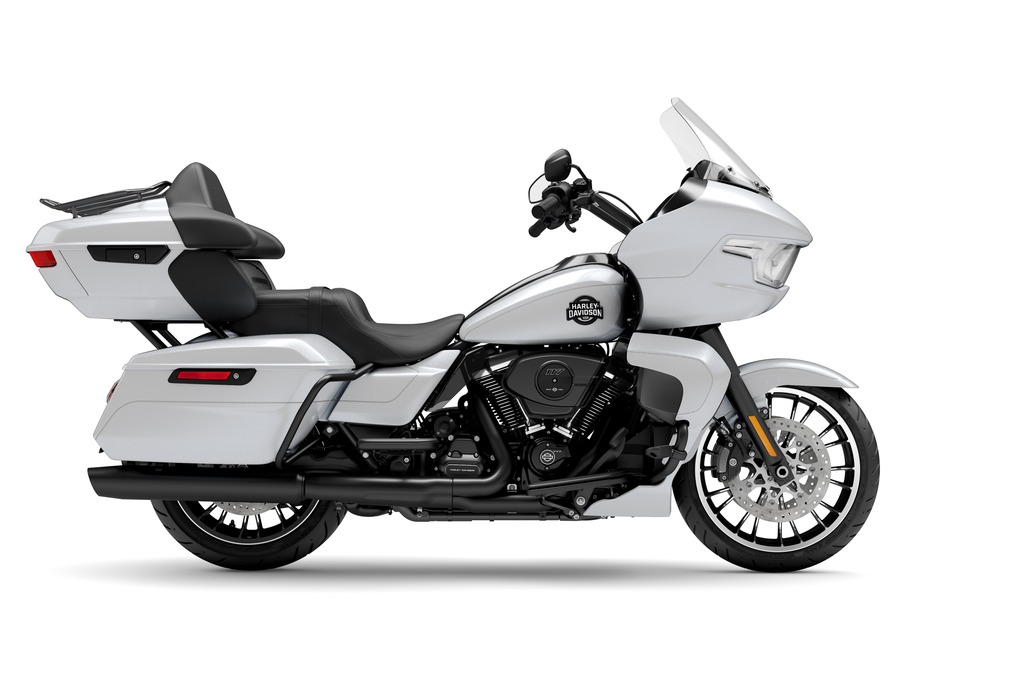
Harley-Davidson’s Police platform is built on the Touring chassis but spec’d for duty use — extended idling, heavy stop-and-go patrol riding, and higher daily mileage than a typical civilian bike. The factory maintenance chart reflects that lineage closely: it mirrors the standard Touring schedule (engine coolant checks, radiator/oil cooler cleaning, fuel door hardware) almost item-for-item, without the spoke-wheel check that applies to some other models.
How Often Does a 2026 Police Model Need Service?
Police models follow the standard H-D interval pattern: a break-in service at 1,000 miles (1,600 km), then a checkpoint every 5,000 miles (8,000 km) through 50,000 miles (80,000 km) — though fleet/duty use often means these intervals arrive much sooner in calendar time than for a civilian rider.
Maintenance Schedule Table
| Mileage (mi / km) | Engine & Cooling | Drivetrain | Brakes & Wheels | Chassis & Controls |
|---|---|---|---|---|
| 1,000 mi (1,600 km) | Engine oil & filter change; check engine coolant; clean radiators/oil cooler | Adjust clutch cable; replace primary chaincase and transmission lubricant; inspect oil and brake lines | Check tire pressure and tread; inspect brake pads/discs and fluid level/moisture content; torque-check front axle nut | Torque-check switch housing and handlebar clamps; lubricate jiffy stand |
| 5,000 mi (8,000 km) | Oil & filter change; inspect fuel lines and fittings | Inspect drive belt and sprockets, adjust as needed | Full brake inspection | Lubricate brake and clutch controls; check rear axle nut torque |
| 10,000 mi (16,000 km) | Oil & filter change; inspect exhaust system, fasteners and shields | Standard drivetrain checks | Brake and tire inspection | Lubricate fuel door hinge and latch |
| 15,000 mi (24,000 km) | Oil & filter change | Drive belt inspection/adjustment | Brake and tire inspection | Standard chassis and control checks |
| 20,000 mi (32,000 km) | Oil & filter change; coolant and radiator/oil cooler check | Standard drivetrain checks | Brake and tire inspection | Standard chassis and control checks |
| 25,000 mi (40,000 km) | Oil & filter change; primary chaincase and transmission lubricant service | Standard drivetrain checks | Brake and tire inspection | Standard chassis and control checks |
| 30,000 mi (48,000 km) | Oil & filter change; replace spark plugs (2-year/30k-mile item) | Standard drivetrain checks | Brake and tire inspection | Standard chassis and control checks |
| 35,000 mi (56,000 km) | Oil & filter change | Drive belt inspection/adjustment | Brake and tire inspection | Standard chassis and control checks |
| 40,000 mi (64,000 km) | Oil & filter change; coolant and radiator/oil cooler check | Standard drivetrain checks | Brake and tire inspection | Standard chassis and control checks |
| 45,000 mi (72,000 km) | Oil & filter change | Standard drivetrain checks | Brake and tire inspection | Standard chassis and control checks |
| 50,000 mi (80,000 km) | Oil & filter change; primary chaincase and transmission lubricant service | Standard drivetrain checks | Full brake system service | Standard chassis and control checks |
Time-Based & Usage-Based Services
- Brake fluid (DOT 4): Flush and replace roughly every 2 years, or sooner if moisture content tests at 3% or higher.
- Battery: Check terminals, torque, and clean connections annually; lubricate with electrical contact lubricant.
- Spark plugs: Replace every 2 years or 30,000 miles, whichever comes first.
- Fuel filter: Replace every 100,000 miles.
- Rear sprocket isolators: Inspect for wear every time the rear tire is changed — not tied to a fixed mileage.
Why Duty Use Changes the Math
The mileage-based chart above is identical in structure to a standard Touring bike, but Police units rarely accumulate mileage the way a leisure rider does. Extended idling at scenes and checkpoints, constant stop-and-go patrol riding, and running in all weather conditions all fall under H-D’s “severe riding conditions” category — which explicitly includes extreme temperatures, heavy stop/go traffic, and short runs. For fleet and department maintenance planning, it’s common to service Police units on a tighter calendar schedule than the mileage numbers alone would suggest, rather than waiting for the odometer to hit each 5,000-mile mark.
____
A 2026 Police model’s maintenance list is functionally the same as a standard Touring bike — coolant checks, drive belt service, and full brake inspections on the same 5,000-mile rhythm — but the real-world service cadence for fleet/duty units should account for engine hours and idling time, not just miles on the clock.
This table is a general planning reference based on Harley-Davidson’s published service interval structure and is not a substitute for the official factory checklist. Exact torque values and fluid capacities are not published in the factory service-interval charts — for those figures, consult an authorized Harley-Davidson dealer, the official service manual, or your fleet maintenance manual.