2026 Harley-Davidson Trike Models Maintenance Schedule
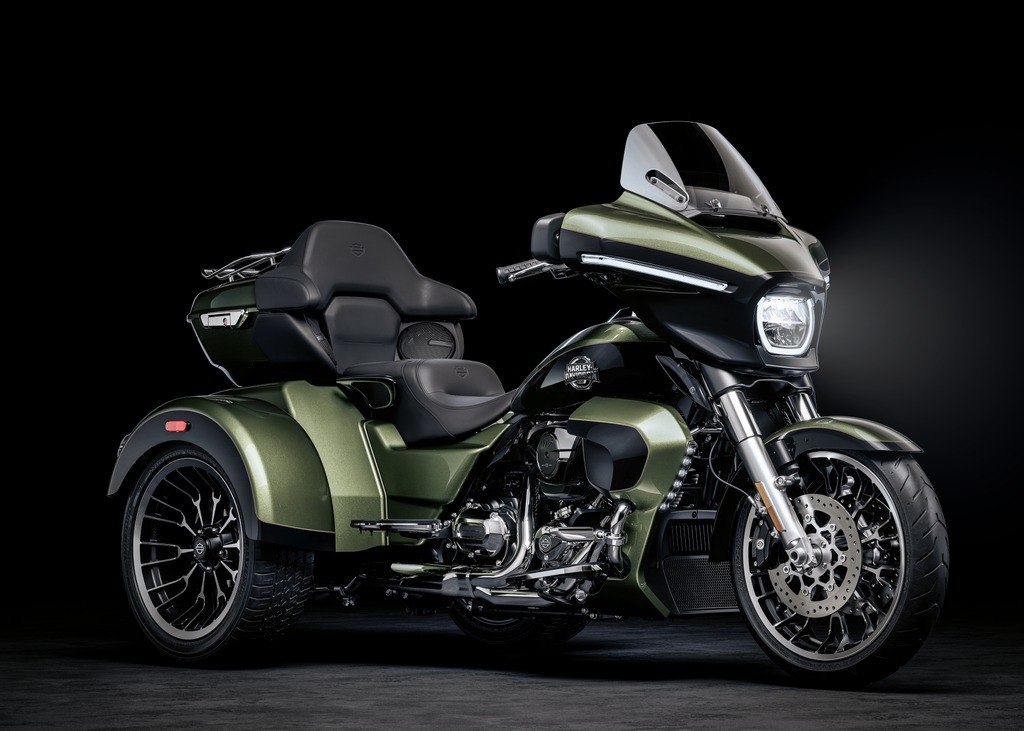
Harley-Davidson’s Trike platform shares most of its driveline DNA with the Touring lineup, but the third wheel brings its own set of maintenance responsibilities — a differential, CV joints and axles, a reverse gear, and extra brake hardware that a standard two-wheel Softail or Touring bike simply doesn’t have. If you’re budgeting for ownership costs or just want to know what a dealer visit actually covers, here’s how the 2026 factory service structure breaks down.
How Often Does a 2026 Trike Need Service?
Trike models follow the same interval cadence as the rest of the current H-D lineup: a break-in service at 1,000 miles (1,600 km), then a checkpoint every 5,000 miles (8,000 km) out to 50,000 miles (80,000 km).
Maintenance Schedule Table
| Mileage (mi / km) | Engine & Drivetrain | Brakes & Wheels | Electrical & Controls | Trike-Specific Items |
|---|---|---|---|---|
| 1,000 mi (1,600 km) | Engine oil & filter change; check/adjust clutch cable; inspect air cleaner filter | Check front/rear brake fluid level and DOT4 moisture content; inspect brake pads/discs; check tire pressure and tread | Inspect electrical equipment and switches; torque-check hand controls and clutch/brake clamps | Inspect differential; check parking brake adjustment; road-test reverse operation |
| 5,000 mi (8,000 km) | Oil & filter change; re-check clutch adjustment; inspect fuel lines and fittings | Inspect brake pads/discs; lubricate brake and clutch controls; check rear lug nut torque | Re-check switch housing and handlebar clamp torque | Inspect CV joints, boots and axles; road-test CV joints and reverse operation |
| 10,000 mi (16,000 km) | Oil & filter change; replace primary chaincase lubricant; inspect exhaust system, fasteners and shields | Full brake inspection; check steering dampener; check rear fork pivot shaft nut | Standard electrical checks | Inspect differential and driveline hardware |
| 15,000 mi (24,000 km) | Oil & filter change; inspect and adjust drive belt and sprockets | Brake and tire inspection | Standard electrical checks | CV joint and reverse-gear road test |
| 20,000 mi (32,000 km) | Oil & filter change; check engine coolant; clean radiators/oil cooler | Brake and tire inspection | Standard electrical checks | Differential and CV joint inspection |
| 25,000 mi (40,000 km) | Oil & filter change; replace transmission lubricant | Full brake system inspection | Standard electrical checks | Reverse operation road test |
| 30,000 mi (48,000 km) | Oil & filter change; replace spark plugs (2-year/30k-mile item) | Brake and tire inspection | Standard electrical checks | Differential and CV joint inspection |
| 35,000 mi (56,000 km) | Oil & filter change; drive belt inspection/adjustment | Brake and tire inspection | Standard electrical checks | CV joint and reverse-gear checks |
| 40,000 mi (64,000 km) | Oil & filter change; primary chaincase and coolant checks | Brake and tire inspection | Standard electrical checks | Differential inspection |
| 45,000 mi (72,000 km) | Oil & filter change | Brake and tire inspection | Standard electrical checks | CV joint and reverse-gear checks |
| 50,000 mi (80,000 km) | Oil & filter change; transmission lubricant replacement | Full brake system service | Standard electrical checks | Differential fluid replacement due around this mileage |
Time-Based Services (Not Just Mileage)
- Brake fluid (DOT 4): Flush and replace roughly every 2 years, or sooner if moisture content tests at 3% or higher.
- Battery: Check terminals, torque, and clean connections annually; lubricate with electrical contact lubricant.
- Spark plugs: Replace every 2 years or 30,000 miles, whichever comes first.
- Fuel filter: Replace every 100,000 miles.
- Differential fluid: Replace every 100,000 miles under normal use, or every 50,000 miles in severe riding conditions.
- Wheel/lug nut torque: Recheck within 500–1,000 miles after any wheel installation or removal — a Trike-relevant point given the rear dual-wheel setup.
Severe Riding Conditions
Extreme heat or cold, dusty environments, mountainous or rough roads, long storage periods, short trips, heavy stop-and-go traffic, or lower-quality fuel all count as “severe” use under H-D’s guidelines — and all justify shortening the intervals above.
__
A 2026 Trike’s maintenance load is closer to a full-dress Touring bike than a standard cruiser, with the differential and CV joint system adding recurring inspection points every 5,000–10,000 miles. The heaviest service stops land around 25,000–30,000 miles (transmission fluid, spark plugs) and again near 50,000 miles (differential fluid, full driveline check).
This table is a general planning reference based on Harley-Davidson’s published service interval structure and is not a substitute for the official factory checklist. Always confirm exact procedures, torque values, and fluid specifications with an authorized Harley-Davidson dealer or your owner’s manual.