2017–2024 Harley-Davidson Touring Milwaukee-Eight 107 (FLHRXS Road King Special)
Of course, here is a full article about the 2017–2024 Harley-Davidson Touring Milwaukee-Eight 107 (FLHRXS Road King Special), written in the requested style and format.
Harley-Davidson Road King Special (FLHRXS)
The Harley-Davidson Touring Milwaukee-Eight 107 engine platform powered a new generation of the company’s long-haul motorcycles, including the introduction of the FLHRXS Road King Special in 2017. The Road King Special represented a significant stylistic departure from the traditional, chrome-laden Road King (FLHR). It was designed as a factory-built custom bagger, featuring a blacked-out, minimalist aesthetic aimed at a rider seeking modern attitude combined with classic touring capability. Produced from 2017 through the 2024 model year, the FLHRXS became a staple in Harley-Davidson’s touring lineup, blending the stripped-down presence of a street cruiser with the robust chassis and powertrain of a Grand American Touring machine.
Development and Introduction
The arrival of the Road King Special was directly linked to the launch of Harley-Davidson’s all-new Milwaukee-Eight engine. This new powerplant was developed to succeed the long-running Twin Cam engine, addressing the need for improved performance, better heat management, and stricter global emissions standards.
The outgoing Twin Cam 103 engine, which powered the previous generation of touring bikes, was an air-cooled, 45-degree V-twin with two chain-driven camshafts. While beloved for its character, it faced challenges with rider and passenger heat, particularly in traffic.
The Milwaukee-Eight engine introduced several key advancements:
Valvetrain: It features four valves per cylinder (totaling eight valves, hence the name), which improves intake and exhaust flow for increased power and fuel efficiency. The Twin Cam used two valves per cylinder.
Camshaft: It returned to a single, chain-driven camshaft, mechanically simpler than the Twin Cam’s dual-cam design.
Vibration and Heat: A single internal counter-balancer was incorporated, reducing idle vibration by approximately 75% for a smoother experience without eliminating the classic Harley-Davidson feel. Strategic oil or liquid cooling was targeted at the hottest parts of the cylinder heads around the exhaust ports, significantly reducing heat felt by the rider.
Performance: The new engine produced more torque throughout the rev range and offered quicker acceleration compared to its predecessor.
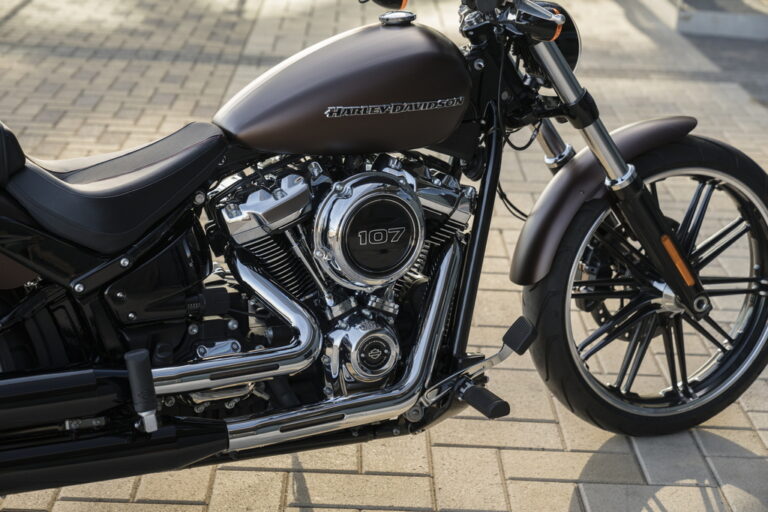
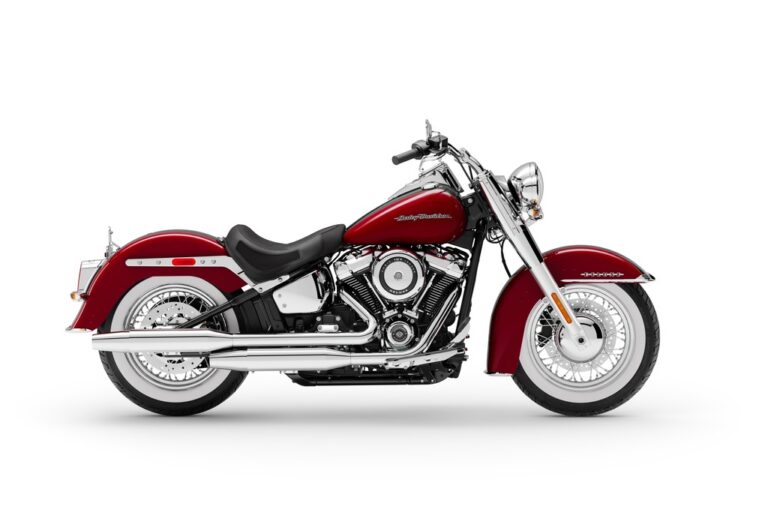
Harley-Davidson leveraged the launch of this new engine to introduce the Road King Special. While the standard Road King continued with its classic chrome styling and large detachable windshield, the Special model stripped this away in favor of a more aggressive look. It featured blacked-out finishes on the engine, exhaust, front end, and controls, along with mini-ape handlebars that promoted a more upright, commanding riding position.
Chassis and Handling
The FLHRXS is built on Harley-Davidson’s foundational touring frame, known for its stability and long-distance comfort. For the 2017 model year, the entire touring line received a significant suspension upgrade. The front suspension features Showa Dual Bending Valve (SDBV) technology, providing the performance of a racing-style cartridge fork with linear damping characteristics for a more controlled and comfortable ride.
The rear suspension consists of emulsion-style shock absorbers with a tool-free, hand-adjustable hydraulic preload. This allows the rider to easily adjust the suspension to account for the weight of a passenger or luggage, improving handling and preventing bottoming out under heavy loads. Braking is handled by Reflex Linked Brembo brakes, with an Anti-lock Braking System (ABS) offered as a standard feature in many markets and model years.
The Harley-Davidson Touring Milwaukee-Eight 107 Engine
At the heart of the Road King Special is the Milwaukee-Eight 107 V-Twin engine. With a displacement of 107 cubic inches (1,746 cc), it was the standard engine for the model throughout its production run. The engine is air-cooled with precision oil cooling directed at the exhaust valves. It is characterized by its strong low-end torque, making it well-suited for city cruising and highway passing. Power is delivered to the rear wheel through a six-speed Cruise Drive transmission and a low-maintenance belt final drive.
Starting in 2020, the Road King Special was available with Harley-Davidson’s optional Reflex Defensive Rider Systems (RDRS). This suite of electronic aids uses an inertial measurement unit (IMU) to provide advanced rider assistance, including:
Cornering Enhanced ABS (C-ABS)
Cornering Enhanced Traction Control System (C-TCS)
Drag-Torque Slip Control System (DSCS)
Vehicle Hold Control (VHC)
Styling and Ergonomics
The defining feature of the Road King Special is its dark, custom-inspired styling. Key elements include:
Blacked-Out Finishes: The entire powertrain, front forks, handlebars, console, and exhaust are finished in black.
Turbine Wheels: It rides on gloss black cast aluminum Turbine wheels, with a 19-inch front and 18-inch rear (model year dependent).
Mini-Ape Handlebars: 9-inch tall, 1.25-inch thick mini-ape bars put the rider in an assertive posture.
Stretched Saddlebags: Custom-style stretched saddlebags create a sleek, slammed profile that flows over the mufflers.
Minimalist Headlight Nacelle: A clean, body-color headlight nacelle replaces the large chrome housing of the standard Road King, and the traditional windscreen is eliminated.
This combination of features gives the FLHRXS a unique position as a bike with the bones of a full touring machine but the soul of a stripped-down custom cruiser.
*
Specifications Table: Harley-Davidson FLHRXS Road King Special (2023 model year reference)
| General | |
| Brand | Harley-Davidson |
| Model | Road King Special |
| Model Class | Touring |
| Model Year | 2017–2024 |
| Type | Cruiser / Bagger |
| Maximum mass (GVWR) | 1,160 lb. (526 kg) |
| Maximum passengers | 2 |
| Performance | |
| Max. power | Approx. 93 Hp (69 kW) @ 5020 RPM |
| Max. torque | 111 ft-lb (150 N•m) @ 3250 RPM |
| Lean Angle, Right | 32 degrees |
| Lean Angle, Left | 31 degrees |
| Size | |
| Length | 95.3 in. (2420 mm) |
| Width | 37.6 in. (955 mm) |
| Height | 43.1 in. (1095 mm) |
| Wheelbase | 64 in. (1625 mm) |
| Seat height (laden) | 26.4 in. (671 mm) |
| Ground clearance | 4.9 in. (125 mm) |
| Curb weight (as shipped) | 774 lb. (351 kg) |
| Engine | |
| Type | Milwaukee-Eight 107, 45° V-Twin, Four Stroke, Air/Oil Cooled, 4 valves/cylinder |
| Displacement | 107 cu in (1746 cc) |
| Bore × Stroke | 3.937 in. × 4.375 in. (100 mm × 111.1 mm) |
| Compression ratio | 10.0:1 |
| Starting system | Electric starter |
| Fuel supplying system | Electronic Sequential Port Fuel Injection (ESPFI) |
| Ignition control system | Electronic |
| Oil capacity (with filter) | 5.2 qt (4.9 L) |
| Engine oil type | SAE 20W-50 Harley-Davidson H-D 360 Motorcycle Oil |
| Transmission | |
| Transmission type | 6-speed Cruise Drive, manual |
| Clutch type | Wet, multi-disc, mechanically actuated |
| Driving system | Belt drive |
| Primary drive ratio | 1.353 (46/34) |
| Final drive ratio | 2.125 (68/32) |
| Gear ratio | 1st: 9.593; 2nd: 6.65; 3rd: 4.938; 4th: 4.0; 5th: 3.407; 6th: 2.875 |
| Chassis | |
| Tire size | Front: 130/60B19 61H; Rear: 180/55B18 80H |
| Rim size | Front: 19 in. x 3.5 in.; Rear: 18 in. x 5 in. (Gloss Black Turbine Cast Aluminum) |
| Capacity of fuel tank | 6 gal (22.7 L) |
| Fuel consumption (est.) | 43 MPG (5.5 L / 100 km) |
| Electric | |
| Battery | 12V, sealed, maintenance-free, 28 Ah |
| Headlight | LED Daymaker |
| Gauges | Tank-mounted analog speedometer with digital display for odometer, trip A, trip B, range to empty, and gear indicator. |
| Suspension | |
| Front suspension | 49mm Dual Bending Valve forks |
| Front travel | 4.6 in (117 mm) |
| Rear suspension | Premium low hand-adjustable rear suspension |
| Rear travel | 2.1 in (54 mm) |