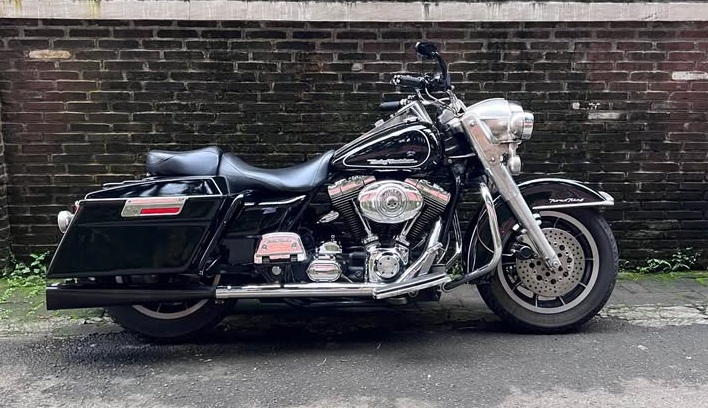
2012–2016 Harley-Davidson Police Twin Cam 103 (FLHTP Electra Glide)
The 2012–2016 Harley-Davidson Police Twin Cam 103 represents a significant era for law enforcement motorcycles in North America. Based on the civilian FLHTP Electra Glide platform, this purpose-built vehicle was engineered specifically for the rigorous demands of patrol duty. The period from 2012 to 2016 saw the universal adoption of the more powerful Twin Cam 103 engine across the police lineup, offering a notable performance upgrade over its predecessor. These motorcycles combined Harley-Davidson’s iconic touring comfort with specialized features required for police work, making them a common sight on highways and city streets alike.
Evolution from the Twin Cam 96
The most substantial difference between the 2012–2016 models and the previous generation of police motorcycles was the engine. Prior models were equipped with the Twin Cam 96 engine, which displaced 96 cubic inches (1584 cc). The transition to the Twin Cam 103 engine increased displacement to 103 cubic inches (1690 cc). This upgrade was not merely about top speed but about delivering more low-end torque and improved acceleration. For law enforcement officers, this translated to quicker response times and better performance when carrying the substantial weight of police equipment. The increased power allowed the motorcycle to accelerate more authoritatively from a standstill and during rolling maneuvers, a critical advantage in traffic enforcement and pursuit situations.
Additionally, this period saw further refinements to the chassis and braking systems, particularly with the introduction of Harley-Davidson’s “Project RUSHMORE” updates for the 2014 model year, which brought features like Reflex Linked Brakes with ABS as standard on police models.
The Harley-Davidson Police Twin Cam 103 Engine
At the core of this motorcycle is the air-cooled Twin Cam 103 V-Twin engine. Known for its distinctive sound and torque-rich power delivery, the engine was tuned specifically for police service. It featured integrated oil cooling to better manage heat during long periods of idling or slow-speed parade duty. The power plant produced a robust torque output, estimated around 100 ft-lb, which was available low in the RPM range, making the heavy bike feel responsive and manageable. The engine was paired with a 6-speed Cruise Drive transmission, allowing for lower RPMs at highway speeds, which reduced engine wear and improved fuel economy during long patrols.
Law Enforcement Modifications
A standard civilian Electra Glide could not perform the duties of a police vehicle without significant modification. The FLHTP model came from the factory with numerous law-enforcement-specific upgrades:
High-Output Charging System: A more powerful alternator was included to handle the electrical load of police radios, sirens, emergency lights, and other onboard electronics.
Specialized Wiring Harness: The motorcycle was equipped with pre-wired harnesses and dedicated switches on the handlebars and console to simplify the installation and operation of police equipment.
Solo Saddle: Instead of a passenger seat, the FLHTP featured a unique air-ride solo saddle designed for all-day comfort for the officer.
Heavy-Duty Components: Key components such as the clutch and suspension were often reinforced to withstand the constant use and abuse of police work.
* Run-Flat Tires: Many agencies equipped their fleets with tires that could remain operational for a short distance even after a puncture, enhancing officer safety.
Chassis and Project RUSHMORE Enhancements
The FLHTP is built on Harley-Davidson’s classic touring frame, designed for stability and long-distance comfort. For the 2014–2016 model years, the introduction of Project RUSHMORE brought significant chassis and handling improvements. These models received a more robust front fork with larger 49mm stanchions, increasing front-end stiffness and improving steering feedback.
The most important safety upgrade was the Reflex Linked Brakes with ABS. This system electronically links the front and rear brakes, distributing braking force optimally between both wheels, regardless of which brake the rider applies. This dramatically reduces stopping distances and improves control during emergency braking maneuvers, especially on unpredictable road surfaces.
In-Service and Civilian Life
During their service life, these motorcycles were workhorses, accumulating miles in all weather conditions. After being decommissioned, typically after reaching a certain mileage or age, they are often sold at auction. They have become popular on the civilian market among riders who appreciate their heavy-duty construction, solo-seat configuration, and the unique history they represent. Many are repurposed into custom baggers or returned to a more traditional touring setup.
***
2012–2016 Harley-Davidson FLHTP Police Specifications
| General | |
| Brand | Harley-Davidson |
| Model | FLHTP Electra Glide Police |
| Model Class | Touring / Law Enforcement |
| Model Year | 2012–2016 |
| Type | Police Patrol Motorcycle |
| Maximum mass (GVWR) | 1360 lb. (617 kg) |
| Maximum passengers | 1 (as configured for police use) |
| Performance | |
| Max. power | Approx. 85 Hp (Est. at wheel) |
| Max. torque | Approx. 100 ft-lb (136 N•m) / 3500 RPM |
| Top designed speed | >100 mph (160 km/h) |
| Size | |
| Length | 98.3 in. (2496 mm) |
| Width | 38.0 in. (965 mm) |
| Height | 61.5 in. (1562 mm) |
| Wheelbase | 64.0 in. (1625 mm) |
| Seat height | 30.7 in. (780 mm) (Laden, with solo seat) |
| Ground clearance | 5.3 in. (135 mm) |
| Curb weight | Approx. 845 lb. (383 kg) |
| Engine | |
| Type | Air-cooled, Twin Cam 103 with Integrated Oil Cooler |
| Displacement | 103 cu in (1690 cc) |
| Bore × Stroke | 3.87 in. × 4.38 in. (98.4 mm × 111.1 mm) |
| Compression ratio | 9.6:1 |
| Starting system | Electric starter |
| Fuel supplying system | Electronic Sequential Port Fuel Injection (ESPFI) |
| Ignition control system | Electronic |
| Lubricating system | Pressurized, dry-sump |
| Oil capacity | 4.0 qt (3.8 L) |
| Engine oil type | SAE 20W-50 Harley-Davidson H-D 360 Motorcycle Oil |
| Idle speed | 1000 RPM ± 50 RPM |
| Transmission | |
| Transmission type | 6-speed Cruise Drive, manual |
| Clutch type | Wet, multi-disc, manual (Heavy-duty) |
| Driving system | Belt drive |
| Primary reduction ratio | 1.353 |
| Final reduction ratio | 2.125 |
| Gear ratio | 1st: 3.337; 2nd: 2.313; 3rd: 1.719; 4th: 1.391; 5th: 1.188; 6th: 1.000 |
| Chassis | |
| Tire size | Front: D408F 130/80B17; Rear: D407 180/65B16 |
| Rim size | Front: 17 in.; Rear: 16 in. |
| Capacity of fuel tank | 6.0 gal (22.7 L) |
| Fuel consumption | Approx. 42 MPG (5.6 L / 100 km) |
| Electric | |
| Battery | 12V / 28 Ah |
| Alternator | High Output, 3-Phase, 50-amp |
| Headlight | Halogen or LED (depending on year/agency) |
| Brakes | 32 mm, 4-piston fixed front and rear. Standard ABS (Reflex Linked Brakes from 2014) |
| Suspension | |
| Front travel | 4.6 in (117 mm) |
| Front Fork | 41.3 mm telescopic (Pre-2014); 49 mm telescopic (2014-on) |
| Rear travel | 3.0 in (76 mm) |
| Rear suspension | Air-adjustable shock absorbers |