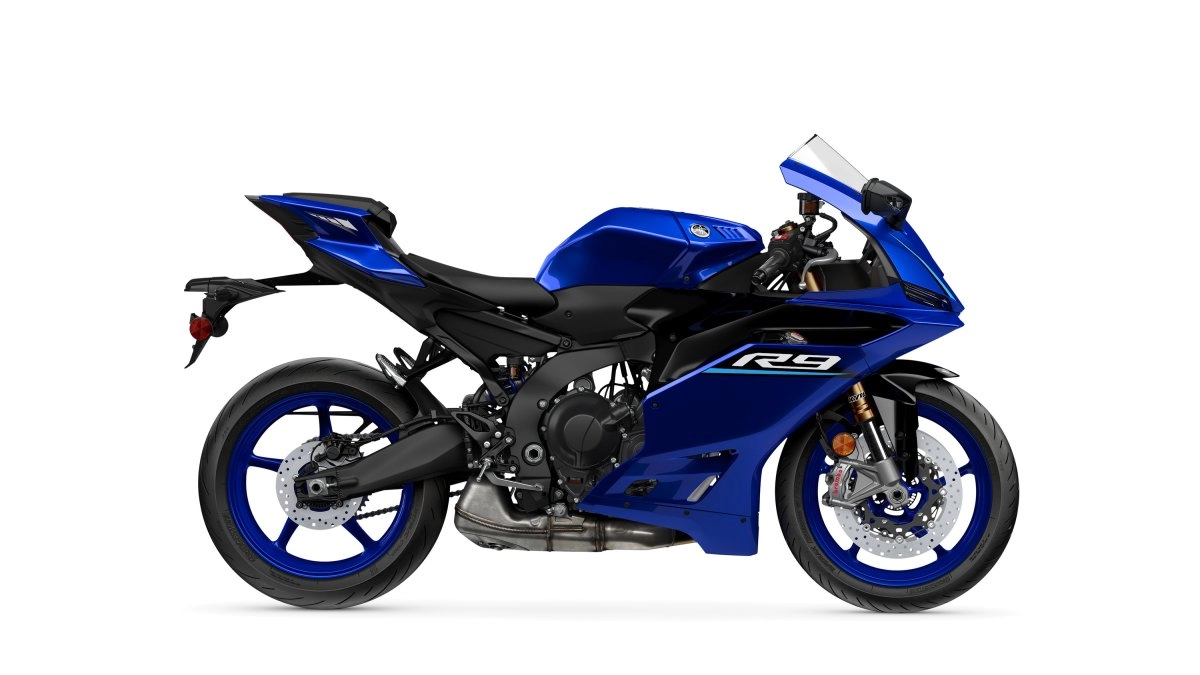
For years, North American riders have been asking Yamaha to wrap their legendary CP3 engine in a supersport chassis. With the decline of the traditional 600cc inline-four class, the arrival of the YZF-R9 marks a pivotal shift in the sportbike landscape. It bridges the gap between the accessible R7 and the track-weapon R1, offering street-friendly torque with track-ready capability.
Here is everything US and Canadian riders need to know about the new heavy hitter in the middleweight class.
Technical Specifications
| Specification | Details (US/Imperial & Metric) |
| Engine Type | 890cc liquid-cooled, DOHC, inline 3-cylinder; 4 valves/cyl |
| Bore x Stroke | 78.0mm x 62.1mm |
| Compression Ratio | 11.5:1 |
| Horsepower | 117 HP (approx. 87.5 kW) @ 10,000 RPM |
| Torque | 68.6 lb-ft (93.0 Nm) @ 7,000 RPM |
| Transmission | 6-speed; multiplate assist and slipper clutch |
| Frame | Gravity-cast aluminum Deltabox frame |
| Suspension (Front) | KYB® 43mm inverted fork, fully adjustable; 4.7-in travel |
| Suspension (Rear) | KYB® rear shock, fully adjustable; 4.6-in travel |
| Brakes (Front) | Dual 320mm discs; Brembo® Stylema monobloc calipers |
| Brakes (Rear) | 220mm disc; single-piston caliper |
| Tires | Bridgestone Battlax Hypersport S23 |
| Curb Weight (Wet) | 430 lb (195 kg) |
| Seat Height | 32.7 in (830 mm) |
| Fuel Capacity | 3.7 gal (14 L) |
| MPG | ~48 MPG (Estimated) |
A Brief History: Why the R9 Exists
To understand the R9, you must look at the “hole” in the market. For two decades, the Yamaha R6 was the king of the middleweight class. However, tightening Euro5 emissions regulations and rising manufacturing costs made the screaming 600cc inline-four engine difficult to sustain for street use. The R6 was discontinued as a street-legal bike in 2020/2021 (remaining only as a track-only variant).
This left a massive gap between the parallel-twin R7 (approx. 72 HP) and the liter-bike R1 (approx. 198 HP). Riders wanted more power than the R7 but more street usability than the R1.
Yamaha’s solution was the CP3 platform. Originally debuting in the FZ-09 (now MT-09) over a decade ago, this crossplane triple engine became famous for its torque and character. The R9 is not simply an MT-09 with fairings; it features a dedicated chassis and geometry designed specifically for supersport handling, officially filling the void left by the R6.
Launch Date and Availability
The global unveiling of the Yamaha R9 took place in October 2024.
-
USA Availability: Units began arriving at US dealerships in March 2025.
-
Canada Availability: Canadian showrooms saw stock arriving shortly after, in April 2025.
Note for 2026 Shoppers: If you are looking to buy in the 2026 calendar year, dealers are expected to have full stock availability, potentially with minor colorway updates depending on mid-year announcements.
Pricing (MSRP)
Yamaha has positioned the R9 aggressively to compete with European rivals like the Triumph Street Triple 765 RS and the Ducati Panigale V2.
-
🇺🇸 USA MSRP: $12,499 USD
-
🇨🇦 Canada MSRP: ~$15,999 CAD
(Note: Prices exclude destination charges, freight, and taxes. Dealer markups may vary based on demand).
Key Features & Technology
Aerodynamics & Design
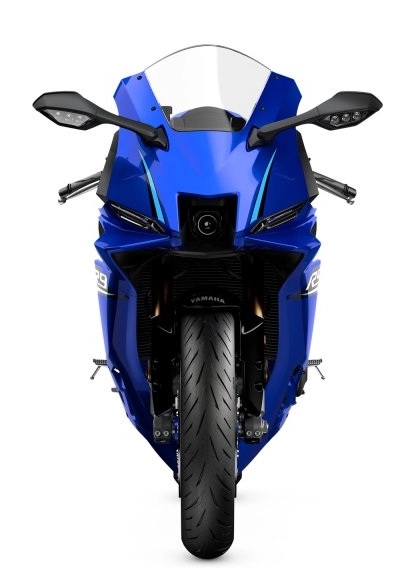
The R9 is the most aerodynamic Yamaha production bike available, surprisingly beating the R1 in aerodynamic efficiency. It features integrated winglets that add downforce to keep the front wheel planted during hard acceleration without compromising the bike’s sleek lines.
Chassis & Suspension
Unlike the MT-09, the R9 uses a bespoke Deltabox aluminum frame. It is the lightest aluminum frame ever used on a Yamaha supersport model.
-
Suspension: It comes equipped with high-spec KYB suspension. The 43mm front forks feature separate compression and rebound damping adjusters on the left and right fork legs.
-
Brakes: For the first time on a Japanese supersport in this class, Yamaha has equipped the bike with Brembo Stylema calipers and a Brembo radial master cylinder, offering superbike-level stopping power.
Electronics Suite (YRC)
The R9 borrows heavily from the R1’s electronics package, utilizing a six-axis IMU (Inertial Measurement Unit).
-
Rider Aids: * 9-mode Traction Control System (TCS)
-
3-mode Slide Control System (SCS)
-
3-mode Lift Control System (LIF – Wheelie control)
-
Brake Control System (BC) with cornering ABS.
-
-
Display: A new 5-inch full-color TFT display allows riders to toggle between street and track themes. It also features smartphone connectivity via the Y-Connect app, allowing for turn-by-turn navigation.
Quick Shifter
The bike comes standard with Yamaha’s third-generation Quick Shift System (QSS), allowing for clutchless upshifts and downshifts.