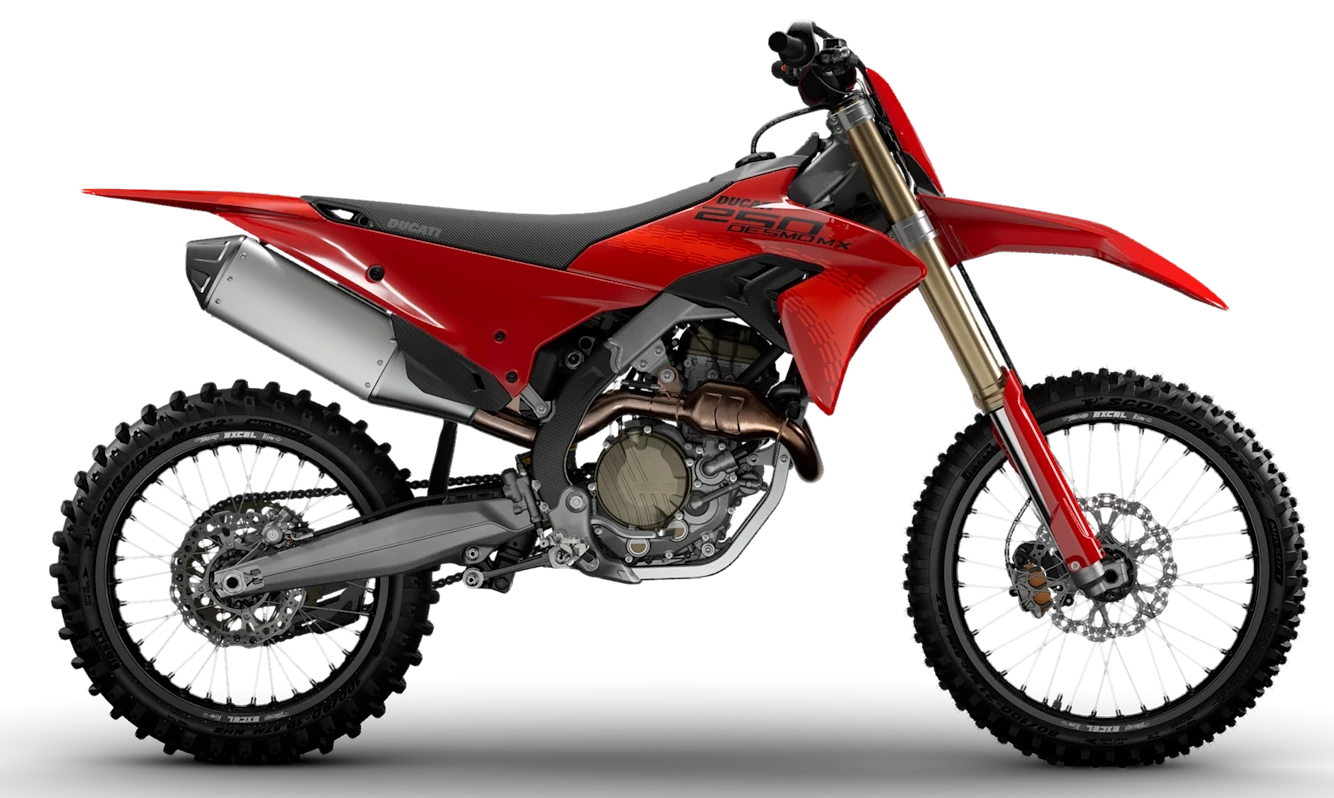
2027 Ducati Desmo250 MX
The 2027 Ducati Desmo250 MX marks Ducati’s second production motocross motorcycle and its entry into the highly competitive 250 cc four-stroke class. Developed specifically for MX2 competition, the model features an all-new 249.7 cc single-cylinder engine equipped with Ducati’s signature desmodromic valve actuation, allowing a claimed engine speed of up to 15,000 rpm while delivering 44.5 horsepower. Rather than serving as a smaller derivative of the Desmo450 MX, the Desmo250 MX was engineered as a dedicated platform with its own lightweight aluminum chassis, Showa suspension, Brembo braking system, and an advanced electronics package that includes selectable riding modes, traction control, engine brake control, launch control, and smartphone-based configuration through the Ducati X-Link app. Designed to combine high-revving performance with precise handling and modern rider assistance technologies, the 2027 Ducati Desmo250 MX represents Ducati’s continued expansion into the off-road competition segment.
Overview
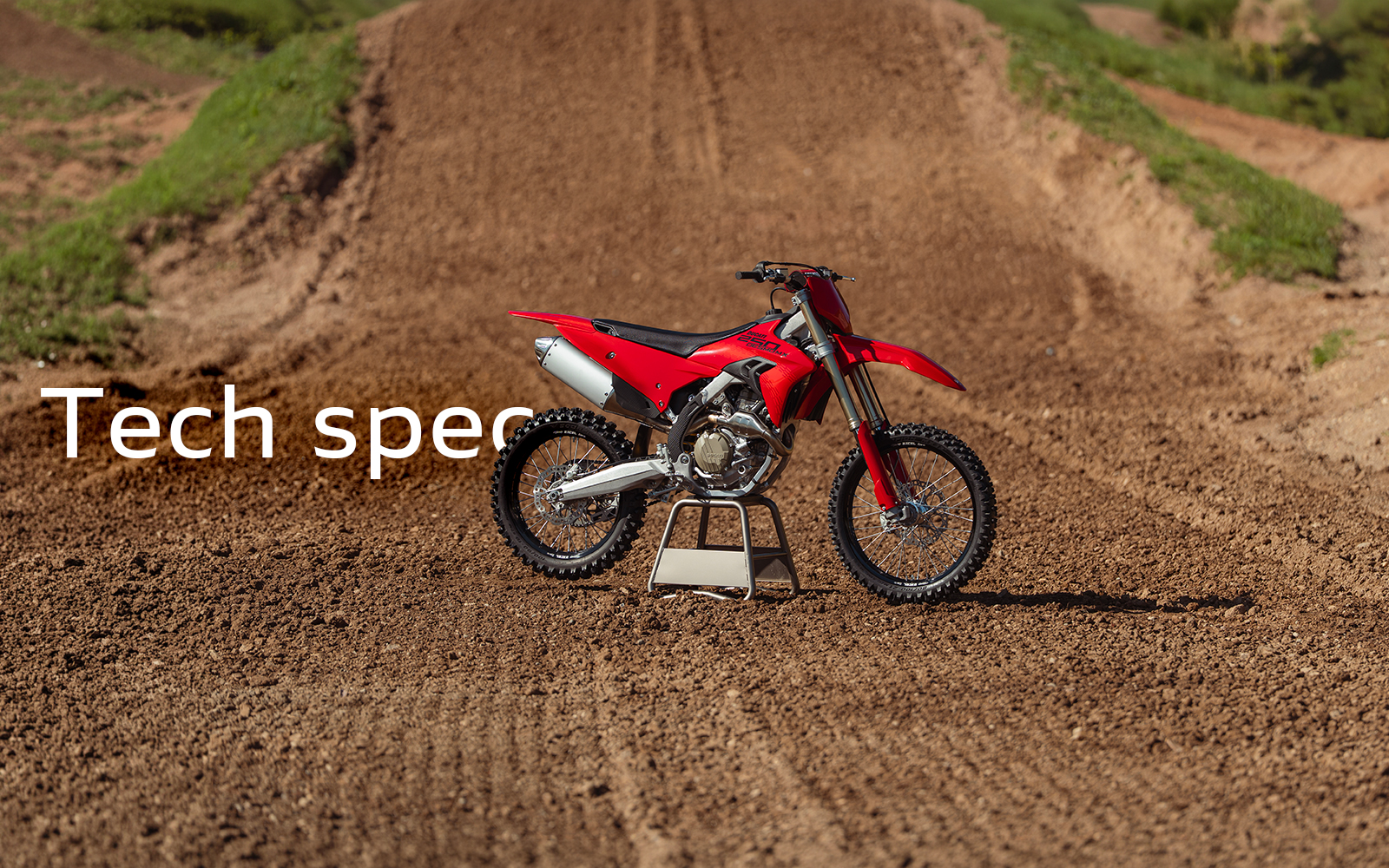
The Ducati Desmo250 MX is a purpose-built competition motocross motorcycle developed for the 250 cc four-stroke class. It represents Ducati’s expansion into modern off-road racing following the introduction of the larger Desmo450 MX platform. Rather than adapting an existing engine or chassis, the Desmo250 MX was engineered as a dedicated motocross machine with its own powertrain, suspension calibration, chassis geometry, and electronic control systems.
Designed primarily for closed-course competition, the motorcycle combines a lightweight aluminum chassis with a newly developed 249.7 cc single-cylinder engine featuring Ducati’s signature desmodromic valve actuation. The design philosophy emphasizes controllable power delivery, predictable handling, and rider feedback instead of relying solely on peak performance figures.
A significant aspect of the Desmo250 MX is the integration of technologies traditionally associated with Ducati’s road-racing motorcycles. Experience gained from the company’s Superbike and MotoGP racing programs influenced the development of the engine architecture, electronic rider aids, and maintenance monitoring system, while the chassis was optimized specifically for motocross applications.
With a wet weight (excluding fuel) of 103 kg (227 lb), the motorcycle is intended to provide a balance between agility, stability, and durability across a wide range of riding conditions.
Development
The Desmo250 MX was developed as an independent project rather than a reduced-displacement version of the Desmo450 MX. Although both motorcycles share a similar design philosophy and overall construction approach, Ducati designed the smaller model specifically for the characteristics and performance requirements of the 250 cc motocross category.
Particular attention was given to reducing overall mass while maintaining structural rigidity. The engine serves as a stressed component within the aluminum perimeter frame, allowing engineers to optimize chassis stiffness and weight distribution simultaneously. Engine mounting points were carefully positioned to improve balance during acceleration, braking, and cornering.
The motorcycle’s overall configuration reflects Ducati’s objective of producing a machine that remains predictable throughout aggressive riding conditions. Instead of focusing exclusively on maximum engine output, the project prioritized rider confidence through manageable power delivery, neutral chassis behavior, and advanced electronic assistance.
Another notable development objective involved reducing the frequency of unnecessary gear changes. By combining a broad torque curve with a high engine speed capability, Ducati sought to provide usable power over a wider operating range, allowing riders to remain in an optimal gear for longer periods during competition.
Engine
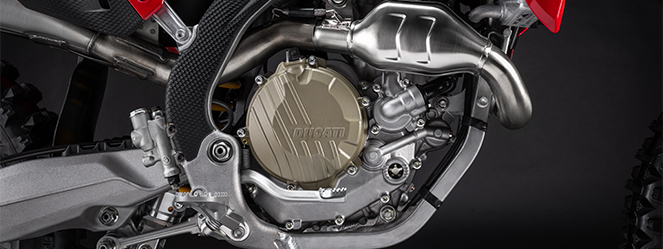
Powering the Desmo250 MX is an all-new liquid-cooled, four-stroke, single-cylinder engine with a displacement of 249.7 cc (15.2 cu in). Unlike many engines in this class that share architecture with larger displacement models, this powerplant was designed specifically for the Desmo250 MX from the beginning.
The engine employs a double overhead camshaft (DOHC) layout with four valves operated by Ducati’s signature desmodromic valve actuation system. Rather than using conventional valve springs, the desmodromic mechanism positively opens and closes each valve through mechanical cam action. This system allows precise valve control at extremely high engine speeds while minimizing the possibility of valve float.
The engine utilizes an 81.0 mm bore and 48.4 mm stroke, producing a relatively oversquare configuration that favors high-revving performance. A compression ratio of 14.5:1 further reflects the engine’s competition-oriented design.
To improve lubrication under demanding off-road conditions, Ducati adopted a semi-dry sump lubrication system combined with liquid cooling. Hydraulic timing chain tensioning contributes to consistent valve timing while reducing maintenance complexity associated with manual adjustment.
Despite incorporating advanced internal components, the complete engine assembly weighs only 24.7 kg, contributing significantly to the motorcycle’s low overall mass.
Desmodromic Valve System
The defining mechanical characteristic of the Desmo250 MX is its desmodromic valve train.
Unlike conventional four-stroke engines that rely on valve springs to close the intake and exhaust valves, Ducati’s desmodromic mechanism mechanically controls both the opening and closing phases of valve movement. This design eliminates valve spring surge and reduces the likelihood of valve float during high-speed engine operation.
For the Desmo250 MX, this technology enables engine speeds of up to 15,000 rpm, an unusually high limit for a production motocross motorcycle in the 250 cc four-stroke category.
Higher permissible engine speed provides a wider usable operating range, allowing riders to extend each gear before shifting when conditions require. During race starts, corner exits, and sections with rapidly changing terrain, the additional over-rev capability can reduce unnecessary gear changes while maintaining effective acceleration.
The absence of conventional valve springs also reduces frictional losses associated with spring compression, contributing to efficient valve operation throughout the engine’s speed range.
Fuel System and Intake
Fuel delivery is handled through an electronically controlled fuel injection system utilizing a Keihin injector in conjunction with a 44 mm Mikuni throttle body.
This configuration provides precise fuel metering across varying engine speeds and load conditions. Electronic management also supports the motorcycle’s selectable engine maps and rider-assistance systems, allowing throttle response characteristics to be modified according to rider preference.
The exhaust system consists of a steel header incorporating a resonator paired with a steel muffler featuring an aluminum outer sleeve. The exhaust was developed to satisfy current FIM and AMA competition noise regulations while maintaining engine performance.
Power and Torque
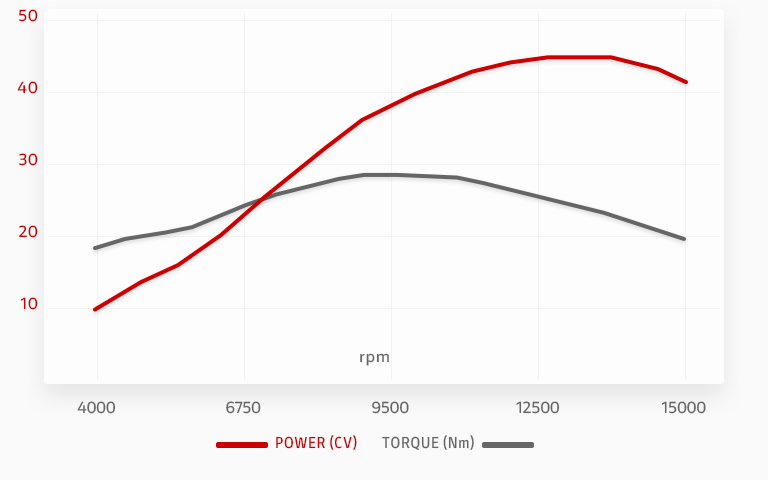
According to Ducati’s published specifications, the Desmo250 MX produces:
- Maximum Power: 44.5 hp (32.7 kW) at 12,500 rpm
- Maximum Torque: 28.3 Nm (20.9 lb-ft) at 8,800 rpm
Rather than concentrating peak output within a narrow rpm range, the engine was engineered to produce a broad and progressive torque curve. Strong low-speed response is combined with sustained pulling power at higher engine speeds, allowing the motorcycle to accelerate effectively across a wide operating range.
The ability to maintain useful power beyond the point where many comparable engines require an upshift is one of the engine’s defining characteristics.
This combination of broad torque delivery and extended engine speed capability contributes to smoother acceleration and more consistent traction, particularly during corner exits and technical sections where minimizing gear changes may benefit overall lap consistency.
Transmission
Power is transmitted through a dedicated five-speed constant mesh gearbox developed specifically for the Desmo250 MX.
Rather than adapting an existing transmission from another Ducati model, gear ratios were selected to complement the engine’s high-revving characteristics and broad torque delivery.
Primary drive utilizes straight-cut gears with a 3.18:1 ratio, while final drive is provided by a DID DMS 520 chain, a 13-tooth front sprocket, and a lightweight 51-tooth aluminum rear sprocket.
The transmission ratios are:
| Gear | Ratio |
|---|---|
| 1st | 32/14 |
| 2nd | 30/16 |
| 3rd | 28/18 |
| 4th | 26/20 |
| 5th | 23/21 |
This arrangement provides closely spaced ratios intended to keep the engine operating within its optimal performance range during aggressive riding.
Clutch System
The Desmo250 MX employs a hydraulically actuated multiplate clutch designed to deliver consistent engagement under demanding riding conditions.
The clutch incorporates seven friction discs together with a diaphragm spring arrangement, providing progressive engagement characteristics while reducing rider effort during repeated starts and continuous shifting.
Hydraulic operation also minimizes changes in lever feel as clutch temperature increases, contributing to more predictable control throughout extended riding sessions.
Quick Shift Function
A standard upshift-only quick shifter allows riders to change gears without closing the throttle or operating the clutch lever.
The system briefly interrupts engine torque during an upshift, reducing drivetrain load and allowing the next gear to engage more smoothly. Operation is managed electronically and can be enabled or disabled using the motorcycle’s handlebar controls.
The quick shifter is intended to reduce interruption of acceleration while decreasing rider workload during competitive riding.
Performance Characteristics
Rather than emphasizing peak horsepower alone, the Desmo250 MX was developed to deliver balanced overall performance suited to modern motocross competition.
Its lightweight construction, compact engine, and centralized mass contribute to responsive handling characteristics, while the broad torque curve allows riders to maintain momentum across varying track conditions.
The engine’s ability to continue producing usable power at exceptionally high engine speeds complements the close-ratio transmission, giving riders greater flexibility when selecting gears through changing terrain.
Together, these characteristics create a motorcycle focused on predictable power delivery, controllable acceleration, and efficient operation throughout a motocross race rather than emphasizing maximum output in a narrow portion of the rev range.
Chassis Design Philosophy
The Ducati Desmo250 MX was engineered around a chassis intended to provide predictable handling characteristics across a wide variety of motocross circuits. Rather than pursuing maximum rigidity alone, the development focused on achieving an effective balance between structural stiffness, controlled flex, and mass centralization. This approach was intended to provide consistent rider feedback during braking, cornering, acceleration, and rapid directional changes.
The motorcycle’s chassis shares its fundamental design philosophy with the larger Desmo450 MX while incorporating geometry and component specifications specifically tailored for the lighter 250 cc platform. Engine positioning, suspension calibration, and weight distribution were developed as an integrated package rather than as independent systems, allowing each component to contribute to overall stability and rider control.
The resulting configuration is designed to remain predictable throughout changing track conditions, whether negotiating rough terrain, deep ruts, jump landings, or high-speed sections.
Aluminum Perimeter Frame
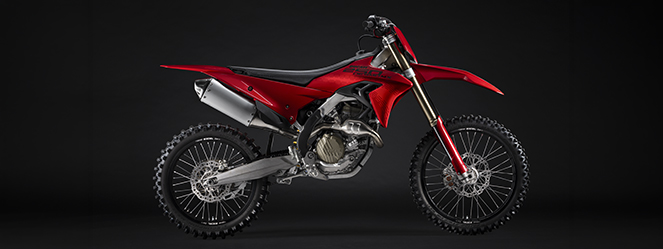
The Desmo250 MX utilizes a welded aluminum perimeter frame constructed from cast, forged, and extruded aluminum components. This manufacturing approach allows individual sections of the frame to be optimized according to the structural loads experienced in different areas of the chassis.
Using aluminum provides an advantageous combination of strength and low mass while enabling engineers to precisely tune chassis stiffness. The frame design also contributes to centralized mass distribution by positioning the engine close to the motorcycle’s center of gravity.
The engine functions as a stressed structural member, allowing the frame itself to be lighter without compromising rigidity. Optimized engine mounting points help control chassis flex while maintaining consistent handling characteristics under heavy acceleration and braking.
Compared with conventional steel motocross frames, the aluminum construction contributes to reduced overall weight while maintaining the durability required for repeated off-road impacts.
Aluminum Swingarm
Complementing the frame is an aluminum swingarm developed using the same design philosophy.
The swingarm was engineered to provide an effective balance between torsional rigidity and vertical compliance, allowing the rear suspension to maintain traction over uneven terrain while preserving directional stability during acceleration.
Its lightweight construction reduces unsprung mass, enabling the suspension to react more quickly to changes in surface conditions. Lower unsprung weight improves the ability of the rear wheel to maintain contact with the ground, contributing to traction, stability, and rider confidence.
The swingarm geometry also works in conjunction with the frame and suspension linkage to maintain consistent chassis behavior throughout the suspension’s operating range.
Weight Distribution and Mass Centralization
An important objective during development was the optimization of weight distribution.
Rather than concentrating mass toward either axle, Ducati positioned major components—including the engine, exhaust system, and fuel tank—to centralize weight near the motorcycle’s center of gravity. This arrangement reduces rotational inertia, allowing the motorcycle to change direction more easily while remaining stable during aggressive riding.
Mass centralization also improves the motorcycle’s response to rider input. Less effort is required to initiate lean angles or correct body position while airborne, contributing to more natural handling characteristics.
This design philosophy becomes particularly beneficial during technical sections that require frequent transitions between braking, acceleration, and cornering.
Front Suspension
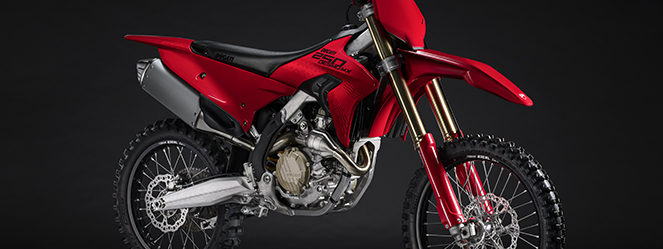
Front suspension duties are handled by a fully adjustable 49 mm Showa upside-down (USD) fork featuring a closed-cartridge design.
The fork incorporates Kashima-coated outer tubes, a surface treatment intended to reduce friction between moving components while improving durability under severe operating conditions.
Unlike suspension systems adapted from other models, the fork used on the Desmo250 MX was calibrated specifically for this motorcycle. Compression and rebound damping characteristics were selected to complement the motorcycle’s chassis geometry, weight, and engine performance.
The closed-cartridge architecture provides more consistent damping performance during prolonged use by separating damping oil from the surrounding air, reducing the likelihood of cavitation under repeated high-speed suspension movement.
The front suspension offers 310 mm (12.2 inches) of wheel travel, providing sufficient movement to absorb large impacts while maintaining steering precision over rough terrain.
Rear Suspension
Rear suspension consists of a fully adjustable Showa monoshock mounted to the aluminum swingarm through a linkage system.
The shock absorber features an anodized aluminum body and was designed specifically for the Desmo250 MX rather than being directly shared with the larger Desmo450 MX. Hydraulic damping settings were developed to provide balanced performance across varying track conditions.
Rear wheel travel measures 301 mm (11.9 inches), allowing the suspension to absorb substantial impacts encountered during motocross competition while maintaining consistent tire contact with the riding surface.
Together with the front suspension, the rear shock contributes to a neutral handling balance intended to minimize excessive weight transfer during braking and acceleration.
Suspension Characteristics
Rather than emphasizing either comfort or extreme stiffness, the suspension package was developed to provide balanced overall performance.
The calibration aims to:
- Minimize excessive chassis pitching.
- Maintain wheel contact over uneven terrain.
- Improve stability during jump landings.
- Provide consistent steering accuracy.
- Preserve rider confidence throughout changing track conditions.
The interaction between the frame, swingarm, and suspension allows the motorcycle to remain composed during aggressive riding while providing sufficient feedback for riders to judge available traction accurately.
This predictable behavior reduces rider fatigue during extended riding sessions by minimizing unexpected chassis reactions.
Braking System
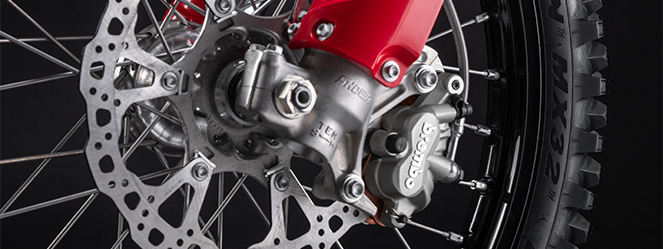
The braking system combines components supplied by Brembo and Galfer, two manufacturers with extensive experience in high-performance motorcycle braking systems.
The front brake consists of:
- Single 260 mm Galfer disc
- Brembo two-piston floating caliper
The rear brake utilizes:
- Single 240 mm Galfer disc
- Brembo single-piston floating caliper
Both front and rear braking systems are hydraulically operated through Brembo master cylinders.
This combination was selected to provide progressive braking characteristics with consistent lever feel under demanding off-road conditions.
The relatively lightweight Galfer discs contribute to reduced unsprung mass while maintaining resistance to heat and mechanical deformation during repeated heavy braking.
Wheels
The Desmo250 MX employs lightweight central-spoke wheels fitted with Takasago Excel aluminum rims, a common choice for competition motocross motorcycles due to their strength and impact resistance.
Wheel sizes are:
| Position | Rim Size |
|---|---|
| Front | 1.60 × 21 in |
| Rear | 2.15 × 19 in |
The traditional 21-inch front and 19-inch rear wheel combination provides a balance between obstacle clearance, steering precision, and traction suitable for motocross competition.
Tires
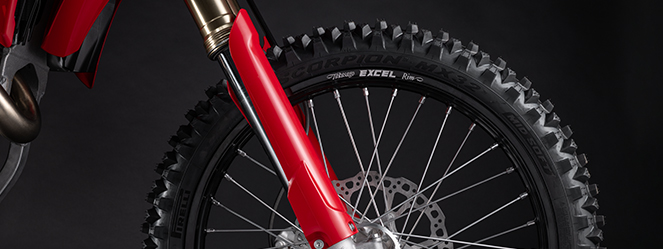
Standard equipment includes Pirelli Scorpion MX32 Mid Soft tires.
Factory tire specifications are:
| Position | Tire Size |
|---|---|
| Front | 80/100-21 |
| Rear | 100/90-19 |
The relatively narrow 100-section rear tire was selected to enhance agility and steering response while maintaining sufficient traction across a variety of track surfaces.
The tire package is intended for use on intermediate and moderately soft terrain, providing a combination of grip, durability, and predictable handling.
Ergonomics
The rider interface was designed to facilitate unrestricted movement during aggressive off-road riding.
Bodywork surfaces are intentionally slim, allowing riders to shift body position easily while standing or seated. The transition between the fuel tank, seat, and side panels minimizes interference during rapid weight transfer.
The overall riding position encourages active rider movement, which is essential for maintaining control through corners, jumps, and uneven terrain.
Rather than emphasizing rider comfort during long-distance travel, the ergonomic layout prioritizes mobility and control appropriate for motocross competition.
Seat Design
The seat features a high-grip surface texture intended to improve rider stability during acceleration while still permitting smooth movement when repositioning.
Its relatively narrow profile allows riders to grip the motorcycle securely with their knees while maintaining freedom of movement during cornering and jump approaches.
Seat height measures:
970 mm (38.2 inches)
This elevated seating position contributes to generous suspension travel and ground clearance while providing adequate leverage for rider body positioning during technical riding.
Riding Position
The relationship between the handlebars, footpegs, and seat creates an upright riding posture suitable for both seated and standing operation.
The standing position is particularly important in motocross competition, allowing riders to absorb impacts with their legs while maintaining control over the motorcycle through body movement.
Control placement was designed to minimize unnecessary rider effort during repeated transitions between seated and standing positions.
The handlebar switchgear also provides direct access to electronic rider aids, allowing adjustments without significant distraction during riding.
Dimensions and Weight
The Desmo250 MX maintains compact overall dimensions appropriate for a modern competition motocross motorcycle.
Key dimensions include:
| Specification | Value |
|---|---|
| Wet Weight (without fuel) | 103 kg (227 lb) |
| Seat Height | 970 mm (38.2 in) |
| Wheelbase | 1,499 mm (59.0 in) |
| Rake | 26.9° |
| Trail | 116 mm (4.6 in) |
| Fuel Capacity | 7.2 L (1.9 US gal) |
| Seating Capacity | 1 rider |
The combination of low overall weight, relatively long suspension travel, and optimized chassis geometry contributes to the motorcycle’s responsive handling characteristics while maintaining stability over rough terrain.
Handling Characteristics
The interaction between the lightweight aluminum frame, fully adjustable Showa suspension, centralized mass distribution, and competition-oriented geometry defines the Desmo250 MX’s overall handling characteristics.
Rather than exhibiting abrupt or highly reactive behavior, the motorcycle was engineered to provide predictable responses to rider input. Neutral steering characteristics are intended to reduce the physical effort required during extended riding sessions while allowing accurate placement through technical sections.
The relatively low wet weight further contributes to agility during rapid changes of direction, while the long-travel suspension maintains composure over uneven terrain and during repeated jump landings.
Together, these characteristics create a chassis package focused on precision, stability, and controllability, complementing the high-revving nature of the Desmo250 MX engine.
Electronics Overview
The Ducati Desmo250 MX incorporates one of the most comprehensive electronic control packages available in the 250 cc motocross category. While electronic rider aids have become increasingly common on road-going motorcycles, their application in competition-oriented motocross motorcycles remains relatively limited. Ducati developed the Desmo250 MX with an integrated electronics platform intended to improve controllability without diminishing the direct connection between the rider and the motorcycle.
Unlike systems that rely solely on predetermined intervention thresholds, several of the Desmo250 MX’s electronic functions continuously analyze riding conditions and adjust their operation according to real-time inputs. The motorcycle’s electronics are integrated with the engine management system, enabling coordinated control of power delivery, engine braking, traction management, and launch performance.
The electronic package was calibrated specifically for the characteristics of the 249.7 cc single-cylinder engine rather than directly adopting settings from the larger Desmo450 MX.
Ducati Traction Control (DTC)
One of the motorcycle’s primary rider assistance systems is Ducati Traction Control (DTC). The system was designed to monitor rear wheel behavior and regulate engine output when excessive wheel slip is detected during acceleration.
Rather than applying abrupt power reductions, the control strategy progressively adjusts engine torque according to the amount of measured rear wheel slip. This approach is intended to preserve acceleration while maintaining available traction on varying terrain.
Unlike simpler traction control systems that respond primarily to throttle position or wheel speed differences, the Desmo250 MX continuously evaluates riding conditions and modifies intervention levels only when necessary. The objective is to provide smoother operation while minimizing unnecessary electronic interference.
The system offers three selectable intervention levels, allowing riders to tailor assistance according to riding style, surface conditions, or track layout. Lower settings permit greater rear wheel slip before intervention occurs, while higher settings provide earlier electronic assistance for reduced traction environments. Riders may also disable the system entirely if preferred.
Engine Brake Control (EBC)
The Desmo250 MX is equipped with Engine Brake Control (EBC), an electronic system intended to improve stability during aggressive deceleration.
Engine braking can significantly influence chassis behavior when entering corners, particularly on loose or uneven surfaces. Excessive engine braking may cause the rear wheel to lose stability, while insufficient braking can reduce corner entry precision.
The Engine Brake Control system continuously monitors several operating parameters, including throttle position, selected gear, and crankshaft deceleration. Based on these inputs, the engine management system adjusts ignition timing and other engine parameters to regulate braking torque delivered to the rear wheel.
By balancing engine braking forces, the system helps maintain rear tire stability during corner entry without eliminating the natural engine braking characteristics expected from a high-compression four-stroke motocross engine.
Engine Brake Control provides two selectable operating levels, enabling riders to choose the degree of electronic intervention appropriate for their preferences and riding conditions.
Riding Modes
The Desmo250 MX is equipped with two standard riding modes, each serving as a configurable collection of engine and electronic control settings.
Rather than functioning as fixed presets, these riding modes allow riders to customize multiple parameters according to individual preferences or circuit requirements. The selected mode determines the behavior of several electronic systems simultaneously, enabling rapid adjustment without individually modifying each setting before every session.
Parameters that can be configured within each riding mode include:
- Engine power characteristics
- Throttle response
- Ducati Traction Control level
- Engine Brake Control level
- Launch Control settings
Once configured, riding modes can be selected directly from the motorcycle’s handlebar controls, allowing riders to change operating characteristics quickly before entering the track.
Engine Maps and Throttle Response
The electronic engine management system includes two throttle response calibrations designed to alter the relationship between throttle input and engine output.
Smooth Mode
Smooth mode provides a more progressive throttle response by moderating initial engine reaction to throttle inputs. This configuration is intended for riding situations where controlled power delivery may improve traction, particularly on slippery or technically demanding surfaces.
Dynamic Mode
Dynamic mode delivers a more direct throttle response, allowing engine output to increase more rapidly in relation to rider input. This setting is intended for riders seeking immediate acceleration response and a more aggressive engine character.
These engine maps alter throttle characteristics rather than changing the motorcycle’s maximum power output.
Quick Shift System
The Desmo250 MX is equipped as standard with an upshift-only Quick Shift system.
The system enables riders to change gears without closing the throttle or operating the clutch lever. During an upshift, the electronic control unit briefly interrupts engine torque, allowing the transmission to engage the next gear while minimizing drivetrain loading.
Quick Shift operation contributes to smoother acceleration and reduces the interruption associated with conventional gear changes. The feature can also reduce rider workload during demanding riding conditions where maintaining throttle control is particularly important.
Activation or deactivation of the Quick Shift system is managed through the left handlebar switch assembly.
Launch Control
Launch Control is designed to improve consistency during standing starts by regulating engine speed throughout the initial acceleration phase.
The system offers three intervention levels, each providing a different degree of electronic assistance.
- Level 1 delivers the least intervention while allowing more aggressive launches.
- Level 2 provides a moderate level of control suitable for a wider range of conditions.
- Level 3 prioritizes stability by applying greater electronic regulation during initial acceleration.
Once activated, Launch Control manages engine speed until the motorcycle accelerates through the launch phase. The system automatically disengages after fourth gear is selected or when the rider releases the throttle.
Handlebar Controls
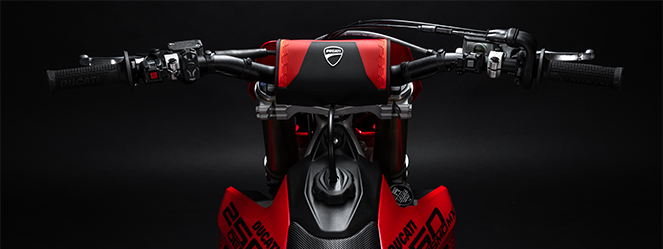
Electronic functions are managed through a dedicated switch assembly positioned on the left side of the handlebar.
The control layout allows riders to:
- Select riding modes.
- Enable or disable traction control.
- Activate or deactivate Quick Shift.
- Engage Launch Control.
Locating these controls within easy reach allows adjustments to be made efficiently while minimizing distraction during riding.
Ducati X-Link App
The Desmo250 MX is compatible with Ducati’s X-Link App through an optional Wi-Fi connectivity module.
Available for both Android and iOS devices, the application provides communication between the motorcycle and a smartphone, enabling riders to monitor selected operational data and configure electronic settings.
Through the application, riders can:
- Modify riding mode parameters.
- Store multiple customized configurations.
- Upload rider settings directly to the motorcycle’s electronic control unit.
- Monitor engine operating conditions.
- View dynamically calculated maintenance schedules.
This connectivity allows electronic settings to be prepared before arriving at the track and simplifies the management of multiple riding configurations.
Predictive Maintenance System
One of the Desmo250 MX’s distinguishing technical features is its predictive maintenance algorithm.
Drawing upon development experience from Ducati’s Superbike and MotoGP racing programs, the motorcycle incorporates software capable of estimating engine stress during operation. Instead of relying solely on fixed maintenance intervals, the algorithm evaluates actual operating conditions to determine service requirements more accurately.
Parameters considered include engine speed, operating duration, and riding intensity. Based on these values, the system continuously calculates engine workload throughout operation.
The resulting maintenance recommendations are displayed through the Ducati X-Link App, allowing service intervals to reflect real-world motorcycle usage rather than predetermined schedules alone.
This approach enables maintenance intervals to vary according to riding conditions. Motorcycles used extensively in racing environments may require more frequent servicing, while those operated under less demanding conditions may benefit from extended maintenance intervals.
Maintenance Schedule
Although predictive maintenance adjusts service recommendations according to operating conditions, Ducati also specifies standard maintenance intervals.
| Maintenance Item | Recommended Interval |
|---|---|
| Engine oil and oil filter replacement | Every 15 operating hours |
| Valve clearance inspection | Every 45 operating hours |
| Piston replacement | Every 45–60 operating hours |
| Major engine service | Every 90–120 operating hours |
These intervals reflect the competition-oriented design of the motorcycle and the operating demands associated with high-performance motocross use.
Instrumentation
Instrumentation on the Desmo250 MX remains intentionally simple.
Rather than utilizing a multifunction digital display, the motorcycle is equipped with an hour meter that records engine operating time. This information assists riders and technicians in scheduling maintenance according to service intervals measured in operating hours rather than accumulated distance.
This arrangement reflects common practice among competition motocross motorcycles, where riding hours provide a more meaningful indication of engine usage than mileage.
Safety Equipment
Standard electronic safety-related equipment includes:
- Ducati Traction Control (DTC)
- Engine Brake Control (EBC)
- Riding Modes
- Ducati Fall Detection
- Launch Control
- Quick Shift (upshift only)
Together, these systems are intended to improve controllability while preserving the direct riding characteristics expected from a competition motocross motorcycle.
Noise Compliance
The Desmo250 MX was developed to comply with contemporary motocross competition regulations governing noise emissions.
According to Ducati, the motorcycle satisfies the applicable FIM and AMA sound requirements, allowing it to meet current standards used in many organized motocross competitions.
Warranty
Factory warranty coverage for the Desmo250 MX reflects its intended use as a competition motorcycle.
The published warranty period is:
- Three months, or
- Twenty operating hours
whichever occurs first.
This limited warranty corresponds with the motorcycle’s specialized competition application and the intensive operating conditions expected during motocross use.
Ownership Characteristics
The Desmo250 MX combines lightweight construction, a high-revving desmodromic engine, and advanced electronic rider assistance within a motorcycle developed specifically for modern motocross competition.
Its electronics package extends beyond conventional rider aids by integrating customizable engine management with predictive maintenance monitoring. Combined with a dedicated competition chassis and purpose-built engine, these systems reflect Ducati’s objective of applying technologies derived from its road-racing experience to off-road competition.
Rather than emphasizing maximum output alone, the motorcycle was engineered to deliver controllable performance, predictable handling, and adaptable electronic support across a broad range of motocross conditions.
Technical Specifications
Engine
| Specification | Value |
|---|---|
| Engine Type | Single-cylinder, four-stroke, liquid-cooled |
| Valve Train | DOHC, four valves, Desmodromic valve actuation |
| Timing System | Ducati Desmodromic Timing System |
| Lubrication | Semi-dry sump |
| Cam Chain Tensioner | Hydraulic |
| Displacement | 249.7 cc (15.2 cu in) |
| Bore × Stroke | 81.0 × 48.4 mm (3.19 × 1.91 in) |
| Compression Ratio | 14.5:1 |
| Maximum Power | 44.5 hp (32.7 kW) @ 12,500 rpm |
| Maximum Torque | 28.3 Nm (20.9 lb-ft) @ 8,800 rpm |
| Engine Speed Limit | 15,000 rpm |
| Fuel System | Electronic fuel injection |
| Injector | Keihin |
| Throttle Body | Mikuni Ø44 mm |
| Cooling System | Liquid-cooled |
| Exhaust | Steel header with resonator and steel muffler featuring an aluminum outer sleeve |
| Engine Weight | 24.7 kg (54.5 lb) |
| Noise Compliance | FIM and AMA regulations |
Transmission
| Specification | Value |
|---|---|
| Transmission Type | Constant-mesh |
| Number of Gears | 5-speed |
| Clutch | Wet multiplate, hydraulic control |
| Clutch Spring | Diaphragm spring |
| Quick Shift | Upshift only (standard) |
| Primary Drive | Straight-cut gears |
| Primary Ratio | 3.18:1 |
| Final Drive | DID DMS 520 chain |
| Front Sprocket | 13 teeth |
| Rear Sprocket | 51 teeth (aluminum) |
Individual Gear Ratios
| Gear | Ratio |
|---|---|
| 1st | 32/14 |
| 2nd | 30/16 |
| 3rd | 28/18 |
| 4th | 26/20 |
| 5th | 23/21 |
Chassis
| Specification | Value |
|---|---|
| Frame Type | Welded aluminum perimeter frame |
| Construction | Cast, forged, and extruded aluminum sections |
| Swingarm | Aluminum |
| Front Suspension | Showa 49 mm USD closed-cartridge fork, fully adjustable |
| Fork Coating | Kashima-coated outer tubes |
| Rear Suspension | Fully adjustable Showa monoshock |
| Front Wheel Travel | 310 mm (12.2 in) |
| Rear Wheel Travel | 301 mm (11.9 in) |
Wheels and Tires
| Specification | Value |
|---|---|
| Front Wheel | Takasago Excel 1.60 × 21 in |
| Rear Wheel | Takasago Excel 2.15 × 19 in |
| Front Tire | Pirelli Scorpion MX32 Mid Soft 80/100-21 |
| Rear Tire | Pirelli Scorpion MX32 Mid Soft 100/90-19 |
Braking System
| Specification | Value |
|---|---|
| Front Brake | 260 mm Galfer single disc |
| Front Caliper | Brembo two-piston floating |
| Rear Brake | 240 mm Galfer single disc |
| Rear Caliper | Brembo single-piston floating |
| Brake Master Cylinders | Brembo hydraulic |
Dimensions
| Specification | Value |
|---|---|
| Wet Weight (without fuel) | 103 kg (227 lb) |
| Seat Height | 970 mm (38.2 in) |
| Wheelbase | 1,499 mm (59.0 in) |
| Steering Rake | 26.9° |
| Trail | 116 mm (4.6 in) |
| Fuel Tank Capacity | 7.2 L (1.9 US gal) |
| Seating Capacity | 1 rider |
Electronics
| Feature | Description |
|---|---|
| Riding Modes | 2 customizable modes |
| Ducati Traction Control | 3 selectable intervention levels |
| Engine Brake Control | 2 selectable levels |
| Engine Maps | Smooth and Dynamic |
| Launch Control | 3 levels |
| Quick Shift | Upshift only |
| Ducati Fall Detection | Standard |
| Smartphone Connectivity | Optional Wi-Fi module |
| Ducati X-Link App | Supported |
| Electronic Maintenance Monitoring | Yes |
Rider Interface
| Specification | Value |
|---|---|
| Instrumentation | Hour meter |
| Handlebar Controls | Riding modes, DTC, Quick Shift, Launch Control |
| Seat | High-grip competition seat |
| Ergonomics | Slim bodywork for unrestricted rider movement |
Predictive Maintenance
One of the Desmo250 MX’s distinctive technical features is its predictive maintenance system. Instead of relying exclusively on fixed service intervals, the motorcycle continuously evaluates engine operating conditions using software developed from Ducati’s racing experience.
The algorithm estimates engine stress by analyzing operating parameters and riding intensity, allowing maintenance recommendations to reflect actual usage. Riders can monitor this information through the Ducati X-Link App, where dynamically calculated service intervals are displayed. This approach enables more frequent maintenance for competition use while potentially extending service intervals under less demanding operating conditions.
Standard Maintenance Schedule
| Service Item | Interval |
|---|---|
| Engine oil and oil filter | Every 15 operating hours |
| Valve clearance inspection | Every 45 operating hours |
| Piston replacement | Every 45–60 operating hours |
| Major engine overhaul | Every 90–120 operating hours |
Standard Equipment
The Desmo250 MX is equipped with a range of standard components intended for competitive motocross use.
| Equipment | Standard |
|---|---|
| Aluminum perimeter frame | ✓ |
| Aluminum swingarm | ✓ |
| Showa USD fork | ✓ |
| Showa rear shock | ✓ |
| Brembo braking system | ✓ |
| Galfer brake discs | ✓ |
| Takasago Excel rims | ✓ |
| Pirelli Scorpion MX32 tires | ✓ |
| Hydraulic clutch | ✓ |
| Lithium-ion battery | ✓ |
| Hour meter | ✓ |
| Riding Modes | ✓ |
| Ducati Traction Control | ✓ |
| Engine Brake Control | ✓ |
| Launch Control | ✓ |
| Ducati Quick Shift (up) | ✓ |
| Ducati Fall Detection | ✓ |
Optional Equipment
The following equipment is available as optional accessories.
| Equipment | Availability |
|---|---|
| Wi-Fi connectivity module | Optional |
| Ducati X-Link smartphone integration | Requires Wi-Fi module |
Warranty
| Specification | Value |
|---|---|
| Warranty Coverage | 3 months or 20 operating hours |
| Intended Use | Competition motocross motorcycle |
The Ducati Desmo250 MX represents Ducati’s entry into the modern 250 cc four-stroke motocross segment with a motorcycle developed specifically for off-road competition rather than adapted from an existing platform. Its combination of a purpose-built 249.7 cc desmodromic engine, lightweight aluminum chassis, fully adjustable Showa suspension, Brembo braking system, and advanced electronic rider aids reflects a design approach centered on balanced performance and rider control.
A defining characteristic of the motorcycle is the application of Ducati’s desmodromic valve actuation to a motocross engine, allowing a maximum engine speed of 15,000 rpm while maintaining precise valve operation. This is complemented by a close-ratio five-speed transmission, customizable electronic control systems, and predictive maintenance technology that adjusts service recommendations according to actual operating conditions.
Beyond its engine design, the Desmo250 MX emphasizes predictable handling through centralized mass distribution, competition-oriented suspension calibration, and a lightweight chassis weighing 103 kg (227 lb) without fuel. Together, these elements produce a motorcycle intended to deliver responsive performance, consistent rider feedback, and adaptability across a variety of motocross environments.
Editorial Notes
- All specifications and technical information presented in this article are derived exclusively from the supplied Ducati Desmo250 MX documentation.
- No external references or third-party sources were used in preparing this article.
- Performance figures, maintenance intervals, and equipment specifications may vary depending on market availability or future manufacturer updates.