Yamaha Vino 125 (2004-2010) Transmission Oil Capacity and Specs
Similar to many automatic scooters, the Yamaha Vino 125 requires regular oil maintenance for two key components: the engine and the gearbox (final transmission), which operates independently of the engine. Below is a detailed guide on changing and filling the gearbox oil, along with the oil capacity for the Yamaha Vino 125.
According to the maintenance schedule in the owner’s manual, the Yamaha Vino 125 gearbox oil should be changed at 600 miles (1,000 km) or after the first month, and subsequently every 4,000 miles (7,000 km) or 12 months
Steps for Changing Final Transmission Oil:
-
Warm Up the Scooter:
- Start the engine and ride the scooter for several minutes to warm up the final transmission oil.
- After warming up, turn off the engine.
-
Position the Scooter:
- Place the scooter on the center stand to ensure stability during the oil change process.
-
Prepare to Drain the Oil:
- Position an oil pan beneath the final transmission case to catch the used oil.
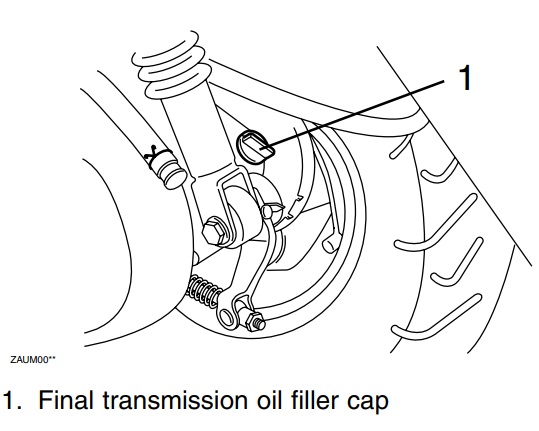
- Remove the final transmission oil filler cap and the drain bolt to allow the oil to drain out.


Drain the Oil:
- Let the oil drain completely from the final transmission case.
Reinstall the Drain Bolt:
- After draining, reinstall the final transmission oil drain bolt and tighten it to the specified torque.
- Tightening torque:
Final transmission oil drain bolt:
23 Nm (2.3 m•kgf, 16.6 ft•lbf)
Refill with Fresh Oil:
- Pour the recommended amount of new final transmission oil into the oil filler hole.
- Make sure to prevent any foreign material from entering the final transmission case.
- Be careful not to let oil spill onto the tire or wheel.
- Recommended oil type:
SAE 85W-140 (GL5) - Oil quantity:
0.13 L (0.14 US qt, 0.11 Imp qt)
Check for Leaks:
- After refilling, inspect the final transmission case for any signs of oil leakage. If leakage is present, investigate the cause and repair as necessary.
By following these steps, you can ensure the proper maintenance of your scooter’s final transmission, keeping it in good working condition and extending its lifespan.