Honda CB1100 Engine Oil Capacity and Best Oil Specifications

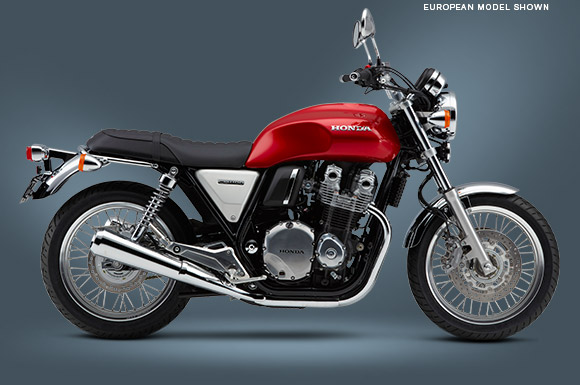
The Honda CB1100, introduced in 2010, pays homage to the iconic CB750. It’s a 1,140 cc air-cooled inline four-cylinder naked bike. Initially available in Japan, Australia, and New Zealand, it reached Europe and the US in 2013. The 2014 revision added a sixth gear and new gauge cluster. The CB1100 Deluxe offers upgrades like a larger fuel tank and ABS, while the EX variant adds wire wheels. In 2017, the sportier CB1100 RS hit the market, featuring LED lights, revised engine, and sport-oriented enhancements. Production ended in 2022. The guide below is intended for the Honda CB1100 production year 2017-2022.
Checking the Engine Oil
- If the engine is cold, idle the engine for 3
to 5 minutes. - Turn the ignition switch to the OFF
position and wait for 2 to 3 minutes. - Place your motorcycle on its center stand
on a firm, level surface. - Check that the oil level is between the
upper level and lower level marks on the
oil level inspection window.
▶If required, clean the inspection
window by turning the wiper.

Adding Engine Oil
Engine oil consumption varies and oil quality deteriorates according to riding conditions and time elapsed. Check the engine oil level regularly, and add the recommended engine oil if necessary. Dirty oil or old oil should be changed as soon as possible.
Selecting the Engine Oil
For recommended engine oil

If you use non-Honda engine oil, check the label to make sure that the oil satisfies all of the following standards:
● JASO T 903 standard*1: MA
● SAE standard*2: 10W-30
● API classification*3: SG or higher
*1. The JASO T 903 standard is an index for engine oils for 4-stroke motorcycle engines. There are two classes: MA and MB. For example, the following label shows the MA classification.
*2. The SAE standard grades oils by their viscosity.
*3. The API classification specifies the quality and performance rating of engine oils.
Use SG or higher oils, excluding oils marked as “Energy Conserving” or “Resource Conserving” on the circular API service symbol.
If the engine oil is below or near the lower
level mark, add the recommended engine oil.
- Remove the oil fill cap. Add the
recommended oil until it reaches the
upper level mark.
▶Place your motorcycle on its center
stand on a firm, level surface when
checking the oil level.
▶Do not overfill above the upper level
mark.
▶Make sure no foreign objects enter the
oil filler opening.
▶Wipe up any spills immediately. - Securely reinstall the oil fill cap.
NOTICE
Overfilling with oil or operating with insufficient
oil can cause damage to your engine. Do not mix
different brands and grades of oil. They may
affect lubrication and clutch operation.
For the recommended oil and oil selection
guidelines, see “Maintenance Fundamentals.”
2 P. 50
Changing Engine Oil & Filter
Changing the oil and filter requires special
tools. We recommend that you have your
motorcycle serviced by your dealer.
Use a new Honda Genuine oil filter or
equivalent specified for your model.
NOTICE
Using the wrong oil filter can result in serious
damage to the engine.
- If the engine is cold, idle the engine for 3
to 5 minutes. - Turn the ignition switch to the OFF
position and wait for 2 to 3 minutes. - Place your motorcycle on its center stand
on a firm, level surface. - Place a drain pan under the drain bolt.
- Remove the oil fill cap, drain bolt, and
sealing washer to drain the oil.
- Remove the oil filter with a filter wrench
and let the remaining oil drain out. Make
sure the prior seal is not stuck to the
engine.
▶Discard the oil and oil filter at an
approved recycling center.
- Apply a thin coat of engine oil to the
rubber seal of a new oil filter. - Install the new oil filter and tighten.
Torque: 26 N·m (2.7 kgf·m, 19 lbf·ft)
- Install a new sealing washer onto the
drain bolt. Tighten the drain bolt.
Torque: 30 N·m (3.1 kgf·m, 22 lbf·ft)
- Fill the crankcase with the recommended
oil and install the oil fill
cap.
Required oil capacity:•When changing oil & engine oil
filter:
3.9 L (4.1 US qt, 3.4 Imp qt)
•When changing oil only:
3.8 L (4.0 US qt, 3.3 Imp qt) - Check the oil level.
- Check that there are no oil leaks.