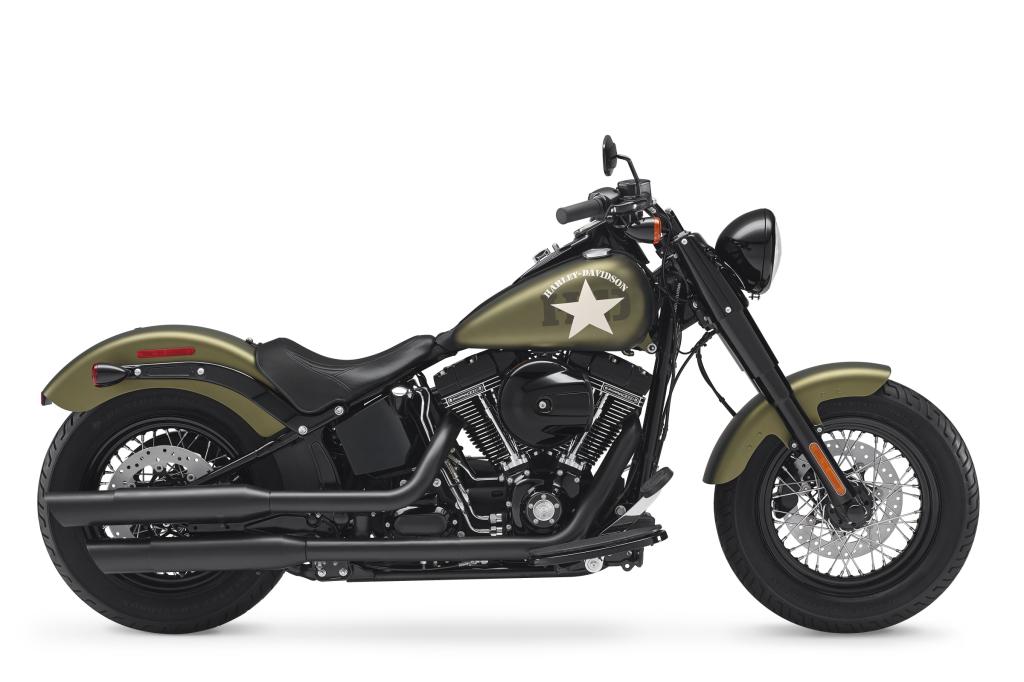
Of course. Here is a full article about the 1986–1999 Harley-Davidson Softail Evolution 1340 (FLSTC Heritage Classic), written in the requested style.
Harley-Davidson FLSTC Heritage Softail Classic (1986–1999)
The 1986–1999 Harley-Davidson Softail Evolution 1340 (FLSTC Heritage Classic) is a cruiser motorcycle that played a pivotal role in the revival and dominance of Harley-Davidson in the late 20th century. Introduced as a flagship model, it masterfully blended the modern engineering of the time with deeply nostalgic styling cues from the brand’s post-war “golden age.” The combination of the reliable Evolution V-twin engine and the innovative Softail frame, all wrapped in a classic touring package, created one of the most iconic and commercially successful motorcycles in the company’s history.
Development and Historical Context
The Heritage Softail Classic emerged from a period of profound transformation for Harley-Davidson. After the 1981 management buyout from AMF (American Machine and Foundry), the newly independent company was focused on rebuilding its reputation for quality and reliability. A critical component of this effort was the introduction of the 1340cc (80 cubic inch) Evolution engine in 1984. The “Evo,” or “Blockhead” as it was nicknamed, was a landmark achievement. It replaced the aging and maintenance-intensive Shovelhead engine, offering significantly improved reliability, better cooling thanks to its aluminum cylinders and heads, and reduced oil leakage—addressing the major criticisms leveled at its predecessor.
Concurrently, Harley-Davidson introduced the Softail frame in 1984 on the FXST model. This revolutionary chassis design was engineered to mimic the clean, rigid lines of vintage “hardtail” frames, which had no rear suspension. However, the Softail cleverly concealed two horizontal shock absorbers underneath the transmission, providing the rider with modern suspension comfort without sacrificing the classic aesthetic.
The stage was set for a model that could fully leverage these two innovations. In 1986, Harley-Davidson unveiled the FLSTC Heritage Softail Classic, a motorcycle designed to directly evoke the spirit of the late 1940s and 1950s Panhead models, particularly the iconic Hydra-Glide.
The 1986–1999 Harley-Davidson Softail Evolution 1340 (FLSTC Heritage Classic) Design
The success of the Heritage Classic was rooted in its carefully curated combination of mechanics and aesthetics. It was not merely a motorcycle; it was a rolling piece of Americana that offered a comfortable and dependable riding experience.
##### The Softail Frame
The foundation of the model was its tubular steel Softail frame. The design provided the visual appeal of a rigid frame with its uninterrupted lines from the steering head to the rear axle. This look was highly desirable among traditional Harley-Davidson enthusiasts but came with the harsh ride of a true hardtail. The Softail frame solved this by using a triangulated swingarm controlled by the hidden shocks, offering a ride quality comparable to contemporary swingarm designs while preserving the coveted vintage look.
##### The Evolution 1340 Engine
At the heart of the Heritage Classic was the air-cooled, 45-degree Evolution V-twin. This engine was a significant departure from the Shovelhead. It ran cooler, lasted longer between rebuilds, and required far less mechanical attention from its owner. Its power delivery was characterized by strong low-end torque, perfect for relaxed cruising. Mated to a 5-speed transmission, the 1340cc Evo provided ample power for both city riding and long-distance touring, all while producing the signature Harley-Davidson sound. During its production run, it was primarily fueled by a Keihin carburetor, providing a direct and analog throttle response.
##### Heritage Classic Styling
The “Heritage” and “Classic” monikers were not just marketing terms; they defined the motorcycle’s visual identity. The FLSTC was adorned with features that paid direct homage to the past:
Full Fenders: Deeply valanced front and rear fenders were a direct link to the touring bikes of the 1950s.
Leather and Studs: The model came standard with studded leather saddlebags, a studded two-up seat, and a matching passenger backrest.
Touring Equipment: A large, detachable windshield provided rider comfort on the highway, while full-length rider footboards added to the relaxed ergonomics.
* Classic Details:** Wire-spoke wheels, a “Fat Bob” fuel tank with dual fillers, and a large chrome headlamp nacelle completed the retro-inspired look.
Legacy and Impact
The FLSTC Heritage Softail Classic was an immediate and sustained success. It perfectly captured the desires of a market eager for classic American style without the mechanical headaches of vintage bikes. It became one of Harley-Davidson’s best-selling models and was instrumental in the company’s financial turnaround and cultural resurgence throughout the late 1980s and 1990s. The model’s formula of combining modern reliability with heritage styling effectively created the modern “nostalgia cruiser” segment, a category that many other manufacturers would later enter. Its long production run with the Evolution engine cemented it as a defining motorcycle of its era.
Specifications Table: 1995 Harley-Davidson FLSTC Heritage Softail Classic
| General | |
| Brand | Harley-Davidson |
| Model | Heritage Softail Classic |
| Model Class | FLSTC |
| Model Year | 1986–1999 (representative specs for mid-90s) |
| Type | Cruiser / Touring |
| Maximum passengers | 2 |
| Performance | |
| Max. power | Approx. 58 Hp (43 kW) @ 5000 RPM |
| Max. torque | Approx. 71 ft-lb (96 N•m) @ 2350 RPM |
| Top designed speed | Approx. 105 mph (169 km/h) |
| Size | |
| Length | 94.3 in. (2395 mm) |
| Width | 36.2 in. (919 mm) |
| Height | 58.7 in. (1491 mm, with windshield) |
| Wheelbase | 63.9 in. (1623 mm) |
| Seat height | 26.5 in. (673 mm) |
| Ground clearance | 5.2 in. (132 mm) |
| Curb weight | Approx. 705 lb. (320 kg) |
| Engine | |
| Type | 45-degree V-Twin, Air Cooled, Four Stroke, OHV |
| Displacement | 1340 cc (80 cubic inches) |
| Bore × Stroke | 3.49 in. × 4.25 in. (88.8 mm × 108 mm) |
| Compression ratio | 8.5:1 |
| Starting system | Electric starter |
| Fuel supplying system | 40mm Keihin constant velocity carburetor |
| Ignition control system | Electronic |
| Lubricating system | Dry sump |
| Engine oil type | SAE 20W-50 |
| Transmission | |
| Transmission type | 5-speed, manual gear shift |
| Clutch type | Wet, multi-disc, manual |
| Driving system | Belt drive |
| Chassis | |
| Tire size | Front: MT90B16; Rear: MT90B16 |
| Rim type | Chrome Laced-Spoke |
| Capacity of fuel tank | 4.2 gal (15.9 L) |
| Fuel consumption | Approx. 42 MPG (5.6 L / 100 km) combined |
| Electric | |
| Battery | 12V |
| Headlight | Halogen |
| Suspension | |
| Front Suspension | Telescopic fork |
| Rear Suspension | Triangulated swingarm with two horizontal, concealed shock absorbers |